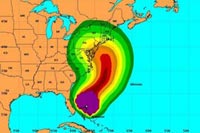
 People within the most affected areas of Hurricane Sandy were 4 times more likely to go to the grocery or hardware store than average, and they were
twice as likely to go to gas stations and convenience stores. Well, duh. We didn’t need portable people meters to tell us that, of course. But the preliminary data from location analytics
company Placed still offer an interesting lens onto how media and marketers can see and address people’s response to real-time events.
People within the most affected areas of Hurricane Sandy were 4 times more likely to go to the grocery or hardware store than average, and they were
twice as likely to go to gas stations and convenience stores. Well, duh. We didn’t need portable people meters to tell us that, of course. But the preliminary data from location analytics
company Placed still offer an interesting lens onto how media and marketers can see and address people’s response to real-time events.
The company took stats during and after the
weekend run up to the storm Oct. 26-28 using its opted-in Placed Panels, which we described in an earlier story as a platform that allows the company to see the stores that
people visit. Again, much of the result is to be expected. What is interesting, however, is the next layer of specificity that metrics like this bring to the fore in very quick order and with
some unanticipated angles. For instance, Placed found that even in advance of the storm, segments like restaurants, places of worship and gyms all saw considerably less visitation.
advertisement
advertisement
More to the
point, some specific brands seemed to become the go-to spots, such as Radio Shack (4X more likely to be visited), Stop and Shop (3X) and Duane Reade or Walmart (2X) compared to the October
averages.
Of course, intuitively, all of these metrics “feel” right and are not "aha" moments. But it is in the speed, precision and granularity of the data where things get
interesting. We can start quantifying the effects of events on behaviors and do it across categories and brands that otherwise would have to report individually and over time before we got a complete
picture. It would be grisly to suggest that companies market against disastrous events in ambulance-chasing style using this kind of information.
But such a level of behavioral data about real
world physical movements can help develop real services that are not only marketable, but can really help people in need. The numbers may be quantifying the obvious, but in doing so they may open up
less than obvious new ideas for products and services that really address need.