 “This is not really a soap opera,” my wife complains during the first hour of the Sunday season opener of “Downton Abbey.”
All other signs point to this being the case. The narrative and editing structure is pure soap, as minute-long scenes juggle multiple story threads and character dynamics at the expense of any larger
narrative structure. Whatever depth and form these characters had for me in Season One has dissipated after the shark-jump of Season Two. I am in it for the meta-experience now, like watching Maggie
Smith sit back and joyfully let Shirley MacLaine trip over her own overacting. The bout should have been called after one scene.
“This is not really a soap opera,” my wife complains during the first hour of the Sunday season opener of “Downton Abbey.”
All other signs point to this being the case. The narrative and editing structure is pure soap, as minute-long scenes juggle multiple story threads and character dynamics at the expense of any larger
narrative structure. Whatever depth and form these characters had for me in Season One has dissipated after the shark-jump of Season Two. I am in it for the meta-experience now, like watching Maggie
Smith sit back and joyfully let Shirley MacLaine trip over her own overacting. The bout should have been called after one scene.
“And clearly a man wrote this. Three minutes in the
church and we just skip over the honeymoon?” My wife was sorely disappointed at the absence of pomp and porn. “This sucks as a soap opera,” she concludes.
advertisement
advertisement
But hers was
but one of many voices I was consulting during “Downton Sunday.” I was curious how this one played on the “second screen,” which otherwise tends toward reality programming,
sports and events. In fact, when I fired up Zeebox, Masterpiece Theatre wasn’t even among the trending shows. Once I found the gang, however, posting to #DowntonPBS, the sheer snarky democracy
of the crowd overran the show experience in much the same way the Grantham dinner party in this first episode devolved into an American-style barbeque.
“No bachelor party? Is it me or is
Branson the worst best man ever?”
“Thomas even eats oatmeal like an asshole.”
“Carson truly is Jim Henson’s most impressive Muppet.”
“Wow a Drama about shirts. Leave it to the English”
“Disastrous dinner party is the epitome of white people problems”
“I hope Mary gets pregnant soon
so she’ll get some boobs.”
“I need to call people ‘clot’ more often”
“Edith, back it up. They can smell your desperation in
India.”
Okay -- maybe not the most clever parallel narrative on social TV, but it is precisely the kind of counterpoint I count on finding in this new media space of crowd
commentary.
To be sure, “social TV” is a bit of a misnomer. TV has always been social. It grew up in the most social space in the post-WWII American home. And using the social
setting as a way of erecting an antidote to TV culture is almost as old. I remember goofing on “Miss America” pageants in the basements of friends. Painfully self-consciously ironic ritual
viewings of “Dallas” were a part of my grad school experience. TV media always had the filter of friends, family, parties. Twitter didn’t invent this stuff.
But second-screen
apps and the current shape of Social TV do change the game in some important respects that can impact the TV experience if we want them to. First, you can find the voice you want here. The quotes
above are just the ones I picked from literally thousands of nondescript cheerleading tweets of the sort that make Twitter as tedious as it can be interesting. But they are what I was looking to find.
By opening the doors to the crowd, the viewer can look for the complementary, supportive, contrarian, irreverent voices they desire. It is something like choose-a-crowd. We can filter the streams to
highlight the voices an attitudes we want and craft for ourselves a virtual audience of the like-minded.
What fascinated me about this process was that I was actively seeking that contrarian
view. Much the same thing happened during the Olympics opening ceremony, which I found so laughably bad I was driven to discover whether others were seeing things the same way.
In these early
stages of “social TV” we tend to conceive of that online conversation around media as somehow a single entity unified by the technology. In fact, the cacaphony of perspectives and
attitudes is closer to the cliques of high school. I was in search of the wiseasses who sensed along with me that “Downton Abbey” is imperialism porn of the sort only PBS can dish so well.
Lord Grantham is the kind of benevolent patriarch that liberal cultural elitists like me eat up shamelessly. We get the pomp and order, the civility and repressed love of British class system -- all
made palatable by hints of progressive politics, the promise of inevitable elite decline and the father figure’s decency. The only moral transgression Lord Grantham is allowed is a 20-second
impure thought and kiss (literally) with a maid for which he scolds himself quickly and rewards her handsomely. Sorry, but how can one not make fun of this show?
But I digress. Social TV media
allows us not only to pull media on-demand. It also ultimately allows us to create a context on-demand -- surround ourselves with the audience with whom we most want to watch a program and tailor a
media environment to our liking. There are some interesting prospects in this model on a number of levels. Simply as an evolution of media consumption, it adds a new set of wrinkles to the notion of
context. To a greater extent than ever before, the viewer has the ability to enhance the experience by tweaking the audience. To some extent we always have done this on a personal social and familial
level. Most Downton Abbey fans probably don’t want to watch the show with me in the room, for instance.
It also opens up some interesting new possibilities for the content makers and
their sponsors. In order to find the Downton Snarks, I have to visually triage a twitter feed. How about if media companies started providing both content and virtual social audiences as well? What if
programmers of content also become programmers of audience, hosts who assemble niches of like-minded viewing audience subsets? And imagine what kinds of targeting could go on at the level of
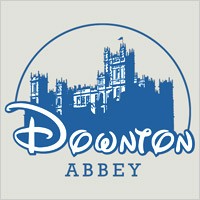
“attitude segments?” Someone was posting into #DowntonPBS t-shirts that mashed up the familiar Downton logo with Disney’s. I am guessing a few from my smirking tribe grabbed some of
those. But imagine the conversions on targeting a viewing audience who self-identified with just the right attitude toward the show?
Is it farfetched to leverage devices and
social media to target subsegments of an audience who come at a show from different angles and tastes? We target team affinities for sports audiences, don’t we? Once the worldwide social sphere
becomes an optional part of the media experience, it could change the way media companies think about themselves as both content and context providers. This is just a variant on the ways in which
mobile has already moved us toward targeting “moods and moments.” Part of the job of the media programmer in a multi-screen age is not just to push content across screens but perhaps to
construct various possible modes of reception, on-demand contexts that shape and enrich the experience.