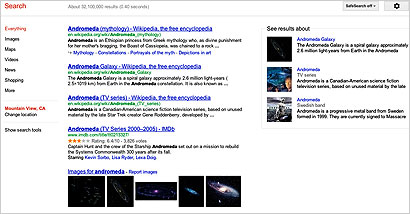
Think of Google's Knowledge Graph as an infant, growing and learning as it develops. It could take years before the industry realizes the technology's full potential. Semantic
search means having the ability to ask complex questions and get accurate answers by cross-referencing data. Those questions asked in a conversational tone could pull in an information page -- a
brand's history from a well-optimized Web site, for example.
A 500-million-entry database of words and their relationship and attributes supports the Knowledge Graph. An attribute for an
astronaut might be how many flights he took. How does Google determine the relevant facts for each query? The technology analyzes historic aggregate search data. For example, most people looking for
information about a certain roller coaster might want to know how old they must be to take a ride. It also provides ways to discover new facts that the searcher might not have thought about.
advertisement
advertisement
Google explains that the change will provide more relevant information faster, yet keep searchers on the engine longer. It addresses a gap in information retrieval and search. Today, search engines
key off of words and streams of letters. But if the engine could breathe as a human, it would inhale to explain how the information will generate more searches from queries or increase time spent
online, and then exhale to describe how searchers find more relevant information faster and more easily. And by the way, we can now see why Google changed its privacy policy consistently across
properties, making them more consistent.
Think of it this way. In the long term, more searches give companies a better-than-average chance to brand products and services through elaborate
paid-search ads, sitelinks, or well-optimized sites serving up specific pages related to the search. But, oh, wait -- Google already does this.
Brands have already begun to question the impact
of these types of queries, along with paid-search ads in organic listings. A Google spokesperson doesn't believe the new feature will detract from or influence paid-search ads that appear on the right
rail or at the top of the page.
Anything that influences people to use google.com more and not switch to Bing will help monetize the engine in the long run, according to Aaron Goldman, Kenshoo
CMO.
Goldman views Google's move as a reaction to changes introduced last week by Bing. He said Google did a nice job of continuing its mission to organize information, but views Bing's decision to integrate social signals from Facebook and Twitter as
"innovative." It will increase use and have a more profound influence on revenue, he said.
Some believe the change could strengthen other Google initiatives, such as concert ticket sales from
sports-related queries. But the engine already returns information on scores, dates and times of events. Social posts also serve up along the right rail for teams with a Google+ page.
Don't
fret if you're not seeing the changes Google began rolling out on Wednesday. Initially the redesign will serve-up to Google users signed into the system in the United States, followed by all
others.