 You're in a stick-shift car, you turn the ignition,
shift into first, release the break, roll along on idle power without touching the accelerator. You're moving -- but there's a big risk that you'll stall if you hit a hill, a curb or a stop light. And
that's what the global auto economy looks like right now.
You're in a stick-shift car, you turn the ignition,
shift into first, release the break, roll along on idle power without touching the accelerator. You're moving -- but there's a big risk that you'll stall if you hit a hill, a curb or a stop light. And
that's what the global auto economy looks like right now.
Beth Ann Bovino, deputy chief economist and senior director at ratings service Standard & Poor's, says the
painful global recovery we're in now ain't going away any time soon, and the situation in the U.S. is tenuous. Speaking at S&P's Global Automotive Hot Topics conference in New York on Monday, she
noted that the economic health of the U.S. is hanging on the upcoming election, soft labor market (with 12 million people unemployed, closer to 23 million if you count discouraged part-timers), oil
prices, the slowdown in Europe and other markets.
advertisement
advertisement
The good news is that the strength of the automotive market -- which Bovino terms "shocking" given other indicators -- is
being driven mostly by the U.S., since the Eurozone and China are both in slowdown.
And Jeff Schuster, SVP of LMC Auto, a division of J.D. Power & Associates, explains that
while the U.S. auto sector recovery is tenuous, buyers have gained some resiliency back, and see real benefits in new vehicles. "When we look at what's driving demand, there are increases in available
credit, return to leasing, and in addition, lots of product activity." He said longer-term demographic trends are also helping the 180-degree change from the recessionary headwind. "Millennials are
coming of age, and Boomers are delaying retirement. Those factors are providing stability over the next several years."
There has also been a shift in terms of the kinds of
vehicles consumers now seek. Schuster points out that recessions have a tendency to trigger changes in buyer behavior and preference, noting that the emergence of minivans, SUVs, and the return of
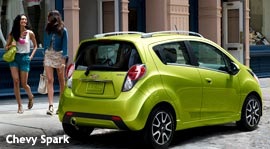
premium pickups were all driven more or less by post-recession behavior. "The movement we are seeing today is into smaller vehicles," he said. In 2005, subcompacts were just over 1% of all non-premium
vehicles sold, according to the LMC Auto. The firm predicts it will be (a still modest) 5% in two years, driven by lots of product activity, "and accelerated by a recession that opened buyers' minds
to the notion of downsizing." said Schuster. Compacts will rise to 35.7% of the U.S. market from 25% in the same period, while midsize volume will drop by 2015, as will large cars (from 30% to
20%.)
Millennials are also more open-minded in terms of domestic brands, which wasn't the case with late Boomers and Gen X, who had come to favor imports. "Millennials grew up
with their parents' vehicles. And while you tend to emulate your parents, you also want to avoid what your parents are driving," says Schuster. "Again, because of the recession and the increase in
competitiveness of Detroit brands, there is now more of an openness among Millennials and other buyers. There's competitive pressure from domestics, who now have the right kinds of vehicles."
Thomas King, senior director of the J.D. Powers' Power Information Network, which tracks retail sales, added that because of the frenetic pace of new product development, there will be some
300 auto nameplates available for purchase next year. "New products help drive consumer interest," he said. "And these aren't just shiny and new, they also have real technological benefits." He notes,
for example, that the Nissan Altima went from 27 mpg for the late model to 31 mpg for the 2013 Altima. "If you are on the fence about buying a new product, and you love design, and find a model that
can save gas, you may come out and buy a new car."
The other key issue that King notes is that while sales volume (about 14.1 million this year if you include fleet sales) is
way off the halcyon days before the recession, those days also saw an incentive arms war among automakers, who were overproducing and therefore desperate to get cars off lots. With all that cash on
the hood, automakers sacrificed profit on the altar of volume. Better to sell at almost any price than allow cars tp depreciate on lots.
King notes that now transaction prices
-- what shoppers are actually paying for new cars -- are a lot higher, at around $28,000 on average, and that means everyone's making more money. Because of that, noted King, by around 2014 sales
revenue will be back to where it was in 2005. "The market is healthy, but the definition of health has changed," he said.