When it comes to getting consumers to consider buying a product that constitutes an extension of the core brand, the (perceived) quality of
that brand matters a lot more than the fit between the heritage products it's known for and the extension.
That's an important point for marketers to keep in mind when, say, a sunblock brand
is mulling a line of sunglasses, according to Kelly Goldsmith, assistant professor of marketing at Northwestern University's Kellogg School of Management.
It's especially relevant now as
licensing programs allow brands free rein to venture far from their heritage product lines, judging from things like Caterpillar-branded footwear, Speedo camping gear and Swiss Army Knife watches, for
that matter.
advertisement
advertisement
A new study from the Kellogg School suggests that there are certain things brands must do to minimize a consumer’s potential cognitive dissonance about the fit of the
extension with the core brand. With the right actions at retail, and assuming consumers hold that brand in high esteem, brands can boost consideration by doing a few simple things that take consumers'
minds off the "fit" issue and onto brand equity.
The study, which was done with New York University and Yale University, found that even simple pictures of the product can make a difference by
shifting consumers’ focus to the quality of the parent brand and away from the fit of the brand with the extension. And more importantly, shelf strategy must give product category precedence
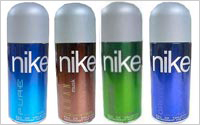
over brand. In other words, Nike Deodorant should be with other body odor blockers, not with Nike products.
"Historically, there has been an overestimation of the importance of fit," Goldsmith
says.
She tells Marketing Daily that because marketers do experiment with brand extensions in an abstract, conceptual setting rather than in a retail setting, they don't see how
interacting with the product changes consideration.
"You don't have to imagine it -- you can interact with it and you also have other brands by compare with,” she says. “We don't
know what Heineken Popcorn will look like until it's in front of in the context of other popcorn brands."
The research included an experiment in which Goldsmith, and study co-authors Tom
Meyvis and Ravi Dhar (of New York University and Yale School of Management, respectively) asked their participants to make a series of choices between two products in the same category (i.e., two
deodorants) that differed only on brand. Each pairing had a high quality, low-fit brand extension (i.e., Nike deodorant) and a high-fit, low-quality brand extension (i.e., CVS deodorant).
In
the control condition, the participants were shown the brand logo only (i.e., Nike and CVS), whereas in the picture condition, participants were shown the brand logos and a picture of the product
(i.e., a stick of deodorant).
The researchers found that the people who saw the photographs of the products were more likely to prefer the higher-quality brand extension to the better-fitting
alternative. For instance, participants chose Nike deodorant rather than CVS deodorant, and the Speedo camping gear rather than the Kmart gear.
In another experiment, Goldsmith and her
co-authors played with ease of comparison with two brands (i.e., Häagen Dazs cottage cheese and ShopRite cottage cheese).
Participants saw two brands next to each other and were asked
either to choose between the brands or to sequentially evaluate the brands. In another phase of the experiment brand comparisons were made more difficult by separating the two brands comparative
brands with "filler" brands and a distraction task. In the end, all participants had to choose between products higher in fit and lower in quality, or higher in quality and lower in fit.
The
researchers discovered that when the brand comparisons were made easier, the participants preferred the extensions of the higher-quality but worse-fitting brands -- for instance, preferring
Häagen-Dazs cottage cheese over ShopRite cottage cheese and Crest facial moisturizer over Wal-Mart facial moisturizer. That was not the case when the category-similar products were separated.
“We demonstrate that merely presenting a product picture or presenting the extension in the context of other brands in the product category leads consumers to adopt a more concrete
representation of the extension,” the authors wrote. “As a result, decision contexts that allow consumers to visualize the extension or compare it with other brands shift consumers’
preference from extensions of better-fitting brands to extensions of higher-quality brands.”
Goldsmith, Meyvis and Dhar also recommend tactics for store managers and retailers to promote
high- or lower-quality brands in their shopping environments.
“For example, a high-quality brand that is introducing an extension to a distant category would benefit from a communication
context that encourages brand comparisons (i.e., through comparative advertising) and presents the extension as vividly as possible,” the authors wrote. “Conversely, a lower-quality brand
that is introducing an extension in an adjacent category should promote isolated evaluations of their product (i.e., by placing it in an end-of-aisle display) to reduce the emphasis on parent brand
quality.”