The journalism business has been hit with
another crisis involving President Donald Trump.
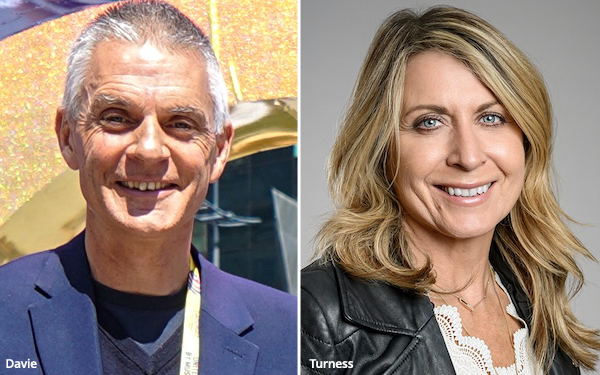
Top BBC executives Tim Davie, director general, and Deborah Turness, head of news, resigned over a documentary in which a speech given
by Trump on January 6, 2021 purportedly was edited to show he was calling for violence.
BBC has pulled the documentary and apologized, but Trump is threatening a defamation suit for $1
billion over the “malicious, disparaging” edits.
This is happening as BBC is making a major push in the United States.
The
documentary was shown last year prior to the election, and apparently was reviewed internally.
What’s the issue? The edited version has Trump saying: “We’re going to walk
down to the Capitol. And I’ll be there with you. And we fight, we fight like hell, and if you don’t fight like hell, you’re not going to have a country anymore.”
advertisement
advertisement
If you're bent that way, you might take that as proof that Trump was trying to incite violence.
But as shown by The Guardian, the “fight like
hell” comment was made much later in the speech. So while Trump said it, it did not follow his comment ”I’ll be there with you.”
Was this edit
part of a deliberate attempt to tie Trump to the violence that day? Politicians and commentators have charged that he did incite the crowd — it’s a matter of
opinion.
A good libel lawyer may have spotted the edit, and called for pulling that version or at least being transparent about the fact that it was edited.
It would be a fascinating defamation trial for libel wonks. But it would be expensive, and one wonders whether libel insurance would cover any judgment against the publications.
Based
on the Times-Sullivan decision, good-faith factual errors do not constitute defamation of a public figure.
Still, Trump has been very aggressive toward the media, suing both The New York
Times and Dow Jones for billions. Both say the cases against them have no merit.
The real message for news organizations is that they have to be careful, given this new state of
affairs.
Editors should insist that libel attorneys vet any negative content about Trump or public figures in general--not to santize the articles,
but to protect the organization as much as possible from minor gaps.
And of course, they must do the same when reporting on private individuals.
We’re sure that responsible U.S.
newspapers were already doing so. And, that said, they must continue fighting for their First Amendment rights.
Update: Outgoing director Davie urged the BBC on Tuesday morning to
continue fighting for its journalism, according to the BBC. The organization made “some mistakes that have cost us,” but he added that BBC journalists were “doing a
fantastic job.” Davie cited three reasons for his departure: the relentlessness of his job, the upcoming Charter renewal for BBC and pressure over the Trump documentary edit.