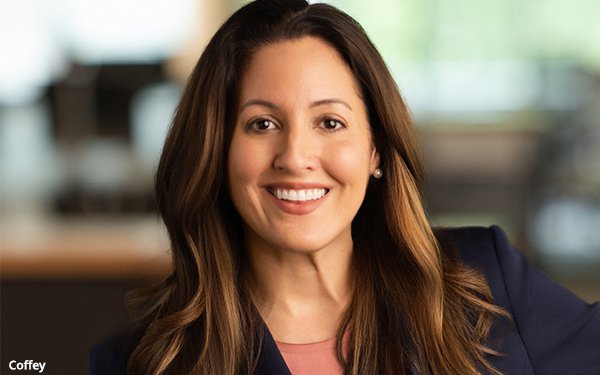
Danielle Coffey was voted a few months ago as one of
the most powerful women in Washington by Washingtonian magazine.
Why is this important to the publishing business? Because Coffey is the president and CEO of the
New/Media Alliance, a group that serves around 2,200 publishers.
The Alliance has fought strenuously (but in a professional manner) to support its members’ rights, filing a long line of
amicus briefs with the courts. Just on Monday, in fact, it submitted an argument backing Emmerich Newspapers in its case against Particle Media (dba as Newsbreak). The case concerns Newsbreak’s
alleged display of entire pages of Emmerich content within Newsbreak’s application surrounded by Newsbreak’s own ads,” the Alliance announced.
The dilemma is
this: “When we went from print to digital, the rules and regulations didn’t follow,” Coffey observes.
advertisement
advertisement
But rules are needed given the level of disintermediation that
now exists.
The problem is that it takes investment to conduct the reporting and vetting that go into fact-based journalism, whether political or lifestyle-oriented.
But content is drawing minimal revenue and is in constant decline.
So what are the biggest concerns going into 2026?
“What 2025 taught us is that we have technological,
regulatory and political realities,” Coffey says. “What our industry has done that I’m proud of is we’ve mobilized in a concerted way to stand firm on fundamental
principles.”
In tech, “we stood up for ourselves by protecting content and using Cloudflare and others to block scraping and all content from being used for AI,” Coffey
adds. “There are over 70 court cases, and we filed our first group industry lawsuit against Cohere.”
The regulatory arena is also complicated given competition with China and the
massive investments being made in AI. Coffey points out there is “an attraction to supporting a regulatory free zone.” (She wryly notes that “voters don’t agree--people want to
be protected.”)
The political area is especially fraught. “We have navigated an incoming administration that has a tense relationship with our industry. This desire for coverage
and interaction has increased. There is a lot of interaction and engagement with the media, but also conflict in that relationship.”
Despite these tensions, the Alliance and the
administration often share similar positions. This year, the industry saw successes in two big pieces of legislation: the tax bill, reconciliation, protecting the corporate rate and the deduction of
ad expenses. Ditto the AI moratorium that stopped the states from putting up guardrails.
“We’ve been doing this for a long time, and have a great team of pros and expert lobbyists
coming to the table with years of building credibility and relationships that come to bear when policymakers are sitting down trying to set policy," Coffey says. “Civil conversations can be had
when the temperature is taken down and legislation is being written that needs to pass. It’s real work, and we are good at real work.”
What is the Alliance hoping to achieve next?
It has debuted its first licensing collective that will be similar in some ways to those in the music space.
An AI company can “come to one collective and license the content of
the collective.”
“Larger companies have the leverage to strike deals on their own. The collective is a way for smaller players to come together and have a
“pro-competitive efficient marketplace,” Coffey adds.
That’s not all it does—the Alliance, for which the American Press Institute is a
supporting organization, runs events, offers newsletters and presents awards.
Coffey joined the News/Media Alliance in 2015 as general counsel and took on the top job in 2023. Prior to
moving to the Alliance, she was vice president and general counsel of the Telecommunications Industry Association, a group with as diverse a membership as the News/Media Alliance.
A
graduate of the Catholic University Law School, she lives with her husband and two daughters, ages 16 and 18, in McLean, Virginia. Her youngest daughter is taking a journalism-yearbook course and is
prepared to move on from there.
“This new generation is very motivated to reflect the world around them, and is very connected and in touch,” Coffey says.