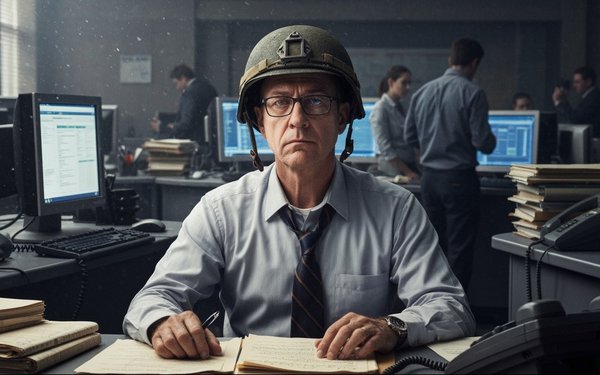
A legendary journalist I once knew worked
the night shift for years, writing and rewriting stories about every bad thing that happened in New York and the world. I often wondered how he was able to handle it. But he was of the old school. He
did his work, writing with precision and clarity. He never complained.
A thoughtful man, he had also done considerable front-line crime reporting, which might have hardened him for
his role on the night shift. He wrote two related books as well.
I now wonder how he would respond to the report just issued by The International News Safety Institute and Cardiff
University on the trauma faced by reporters covering wars—not those actually in the war zone but seated at their newsroom terminals. It is based on surveys of two dozen newsrooms in the UK and
Europe, and interviews with 30 newsroom leaders and trauma experts.
advertisement
advertisement
What is the problem?
“For those whose job is to review and edit such
stories in newsrooms, the impact can be even more distressing. Often it is younger journalists, working long shifts monitoring online images, who are the most affected by what has been called the “digital frontline”.
The study continues, “Newsrooms have long recognized the
dangers of sending staff into war zones and to report on hazardous events. They provide journalists with safety training and equipment, and have well established protocols. Now, they are having to
consider how to protect the mental health of staff based in the newsroom, as they see increasing numbers of journalists suffer from post-traumatic stress disorder (PTSD) or related conditions.
Unfortunately, only
“10% of newsroom leaders surveyed said they had proactive measures in place, preparing staff before they took up roles exposing them to frequent distressing images. Barriers to change include a
legacy of “macho” culture, restricted funding or simply a lack of focus on
the issue.
Of course, people in general are shocked and traumatized by war coverage and by the constant flow of other horrific news—the murder of the Reiners, the kidnapping of
Savannah Guthrie’s mother, the brutality of ICE. Perhaps retreating to childhood, my wife and I recently saw Walt Disney’s animated feature "Snow White and the Seven
Dwarfs" at New York’s Film Forum. I was sorry when it was over.
But here’s the real problem. "It isn’t simply looking at distressing images of suffering which is a
problem,” the study continues. “It’s increasingly recognized that what’s known as “moral injury”, which comes from witnessing, or failing to
prevent events that violate one’s own moral values, can be distressing. Examples include the guilt of being unable to help those in danger or being expected to frame stories in ways the
journalist may personally disagree with, violating their personal ethics.”
What to do? Publishers and editors must support their overseas correspondents and perhaps offer newsroom
counseling on handling these stresses. That would cost money. In the end, hard-working newsroom writers should remember what a character says in the movie "Godfather II": “This is the business
we chose.”
The full report can be found here.