Meal deals and QSRs go hand in hand, but a new study has
revealed that consumers value taste and quality over a good deal.
Published late last month, the new Consumer Crave Study from Alvarez & Marsal’s Restaurant Group surveyed
1,000 U.S. consumers on their QSR dining habits.
The report yielded five emerging consumer trends: the expansion of the meaning of “value,” modular meals on customer terms,
intentional indulgence, new flavors and nostalgia as inspiration.
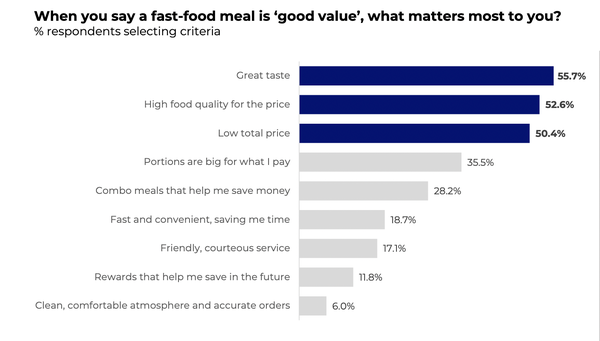
The redefinition of value emerged as the biggest trend, as consumers no longer define it as purely price-driven. Over half of
respondents (56%) said value is actually “anchored” in taste, with “good value” meaning great-tasting food, not just a low price. Quality of food also determines value, with
53% of those surveyed reporting that “high quality for the price” is next most important after taste.
advertisement
advertisement
“Our research shows that consumers define value emotionally, not
transactionally,” Jen Meyers, managing director of A&M’s A&MPLIFY practice told QSR Insider. “When people say a fast-food meal is ‘good value,’
they’re not just talking about price — they’re talking about how the food tastes, whether it feels high-quality, and whether it satisfies a craving.”
Modular meals are
gaining in popularity, as customers are abandoning set meals and mealtimes for “grazing, snacking, and eating across nontraditional dayparts, mostly off-premise.” Fifty-eight percent of
those surveyed say grabbing a quick snack or small bite is a key reason for their QSR visit, signaling a shift from meals to mini-meals.
Intentional indulgence is trending as consumers want “balance, not restriction,” when
frequenting QSRs. And while the study found “70% value both comforting favorites and healthier options,” healthy is now defined as “fresher, cleaner, and customizable—not
low-calorie or diet-branded.”
As far as introducing new flavors, customers reported that innovation works best when rooted in the familiar. Consumers favor twists on known items,
seasonal flavors and culturally relevant mashups, with nearly half preferring remixes of existing menu items over entirely new concepts. Again taste is paramount here, with consumers reporting that
brand collaborations do generate buzz, but are only worth it if the flavor delivers as well.
Lastly the nostalgia trend is continuing into 2026, with respondents reporting that they crave
comfort foods tied to “memory, ritual, and emotional reassurance,” especially during breakfast. Two out of three rated familiar comforts and memories of good times as extremely important,
with over one third saying “classic and comforting breakfast items are important, just behind speed and value.”
Looking ahead for QSRs, Meyers said “In 2026, value will be
won on quality first — price second. The next phase of value isn’t about racing to the bottom on price. It’s about delivering food that feels crave-worthy at a price that feels fair.
QSRs that invest in flavor, execution and consistency will earn loyalty. Those that rely on discounts alone may win short-term traffic — but risk losing their most valuable customers.”