Readers who don’t know much
about The Epoch Times may want to be brought up to date.
Yes, it is associated with Falun Gong, the religious group banned in Communist China. And it
reflects strong anti-Communist positions.
But there is more to the independent publication founded in 2000. Led by CEO Samuel Zhou and editor in
chief Jasper Fakkert, The Epoch Times has repositioned itself over the past several months to emphasize in-depth, high-level journalism and opinion.
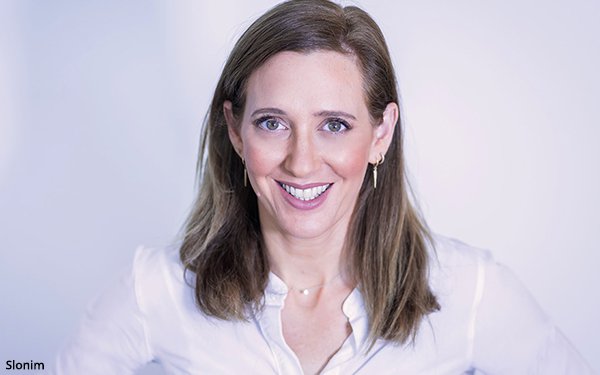
“In this age, people stop after the headline,” says Hadas Slonim, senior marketing director at The Epoch Times. “People need to go deeper, to stop and read
in depth.” Of course, some do.
advertisement
advertisement
Slonim, who is from Israel, joined the product one year ago after helping to establish Epoch Magazine Israel, and is now
overseeing its ongoing rebrand.
One of the newer features is Wisdom, a series of articles that seem to take a more philosophical approach. For instance, last Thursday,
it had a think piece called “The Science of Manipulation: Why Good People Follow Orders to Do Bad Things,” a pertinent topic for this era.
On Friday, Wisdom featured “The
Greatest Logician Since Aristotle—and Why He Believed in Life After Death.”
Judging by Tuesday’s home page, Chinese-related coverage is prominently featured. The
lead story (as it is almost everywhere) is on Trump’s trip to China. Then there is “How US Is Using Iran War To Squeeze China Ahead of Trump-Xi Summit.”
Another
in-depth piece is titled, “They Felt Safe in America—Until Beijing Went After Their Parents in China.”
Other news stories are headlined, “China’s Support for
Iran’s War Effort: What to Know,” and “Prosecutors: Chinese American Curried Favor with CCP Officials Before Opening Police Outpost.”
Those who worry about Taiwan will
certainly try to keep up with the coverage.
Of course, much of the reporting is also devoted to politics, finance, sports, health, entertainment and family. The publication
does not seem to be hostile to Donald Trump.
The Epoch Times is also offering podcasts and games like the daily crossword or the Epoch Sudoku Central on
different levels. And there is a steady flow of infographics, ranging from “The CCP’s Cyberwar Machine” to “Wisdom From America’s
Presidents.”
Slonim argues, “We need more to life than just the here and now—we try to give more thought-provoking information."
That is in line with its
mission, which is to “inform, inspire and elevate our readers by delivering fact-based journalism rooted in tradition and integrity that encourages independent
thought.”
How is The Epoch Times doing? Very well, Slonim says.
“Advertising is not the biggest part if our revenue stream—90% comes
from subscribers,” she reports.
The Epoch Times has more than one million paid subscribers, and growing; about 782,000 are digital-only, while 272,000 have a
print-digital package. And it has a Facebook following of around 9 million.
The annual digital subscription fee is $39.
Slonim is leading a marketing strategy that
looks beyond traditional ROI and CPA metrics to focus on clarity and depth in content and building trust with the audience while other organizations are driven mostly by AI algorithms.
“Even in our marketing, we try to have people’s voices,” she says. “People are first.”
Does The Epoch Times use
AI?
“We use AI, but editorial doesn’t,” Slonim answers.
On another front, The Epoch Times recently launched free
digital access for students — they can sign up for a free subscription for up to five years.
What’s next?
More documentaries and videos in
2026. The Epoch Times has done documentaries about the Charlie Kirk's assassination, (“Truth Under Fire—The Defaming of Charlie Kirk”) and the U.S.
healthcare system, critical race theory and the upcoming “Silent Harvest: The Courage To Speak Up,” on alleged organ harvesting in China.
The goal is to ensure that content
will still be relevant in five years.
But aren’t some of these topics likely to rattle some readers and signal political intent? Some publications take on hysterical
tones when covering these things.
Slonim concludes, “We offer clarity and calm.”