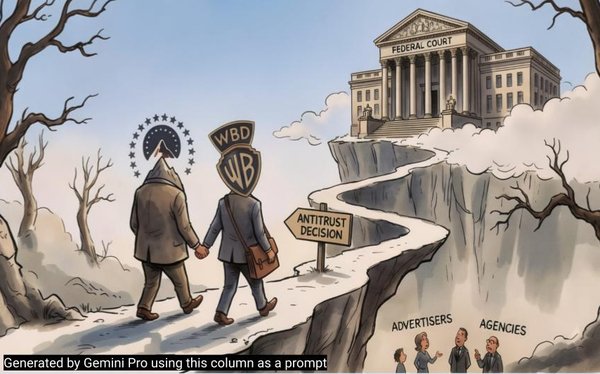
In case you aren’t aware (maybe you live in a box),
a federal judge put the Paramount-Warner Bros. Discovery merger on temporary ice due to lawsuit filings from several states claiming monopolistic concerns.
The result is that Paramount agreed to
push the closing to as late as June 2027, depending on results of the various court cases or a specific timeline for maturing those cases. This is impactful because it has intense implications for the
ad market as we hit the back half of 2026 and look ahead to 2027.
Every agency and brand expects this deal to happen. That part isn't in question. Combining Paramount's
inventory with Warner's provides scale, quality, and leverage across linear, streaming, and sports.
Once they are aggregated and aligned, there could be a strong negotiating position for the
buyer, not just the seller. A combined entity could mean more value per dollar spent by the advertiser, with better packaging and fewer redundant conversations with two separate ad sales teams selling
overlapping audiences. Those are all positive, right?
advertisement
advertisement
I worry about the timeline. The buyers want to engage, and the sales teams want to be selling, but it’s very difficult to
commit to anything with the threat of it not happening, or happening in a way that can’t be recognized today.
Why would a buyer commit high budgets to either company right now when they
don’t have clear line-of-sight into what the new entity will look like, how it will operate, and what benefits they will have because of the merger? That isn’t a buyer being difficult or
trying too hard to create leverage. That’s just a buyer being smart.
Before you commit massive dollars, you need some certainty. You don't lock in your biggest commitments to
an asset that's actively being restructured underneath you when patience costs you nothing and might get you a better deal in six months.
That will become a material problem the
moment we approach the 2027 upfront marketplace.
The upfront isn't just a sales calendar event. It's the primary mechanism the entire TV and streaming ecosystem uses to lock in a
year's worth of commitments.
Buyers show up and sellers use that visibility to plan content, staffing, and inventory pricing for the year ahead. If this merger is still in limbo when the next
upfront cycle gets underway next spring, we'll see buyers do exactly what they're doing now, but with much larger impact.
Instead of a few brands quietly waiting, we'll have two of the largest
sellers in the market walking into their most important selling season with buyers deliberately underweighting them until ownership questions resolve.
If you factor in a full upfront
cycle in which buyers are hedging their commitments because nobody knows what the combined company will look like, or when, it won't just soften one year of ad revenue. It will start to undermine the
actual thesis of the deal.
The entire case for paying $110 billion was that a combined Paramount-Warner is worth more than the two companies separately. If buyer hesitation drags down
committed revenue during the marketplace window that's supposed to prove the thesis, the delay doesn't just cost Paramount a fee. It erodes the value of the thing they're fighting this hard to close
and they’ll be stuck digging out of the hole to fix it.
Everyone's watching the antitrust fight because it's got drama, but it also has a defined endpoint. Once a judge rules,
or the parties settle, the legal uncertainty resolves one way or another.
The upfront won’t wait for that. It happens on a regular schedule and has implications for the remainder of the
year, whether the merger is resolved or not. And if it lands in the middle of this limbo, the damage it does won't be temporary. Commitments made during a hesitant upfront don't just bounce back the
following year. They have the potential to reset the baseline, and nobody really wants that.
Paramount and Warner Bros Discovery both know this. I'd bet money the lawyers are
optimizing for a “sooner rather than later” decision. They want this approved and progressing ASAP. The sales leadership on both sides is quietly hoping the same.
My
fingers are crossed for this, too. I don’t like drama. I like it when the benefits of a merger like this are clear. I am betting you do, too.