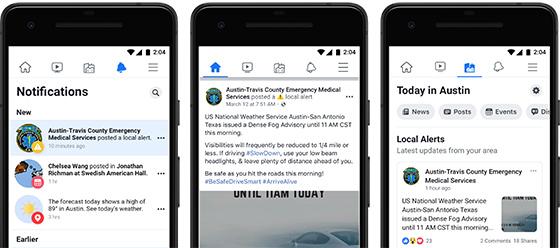
Stateside, Facebook
plans to expand access to “local alerts” to all eligible Pages by the end of the year.
The tool is designed to help local authorities create convenient lines of communication
between citizens and first responders during emergencies.
Since its beta launch in 2018, Facebook says the tool has been tested by about 350 local governments around the country.
During that time, local alerts have been employed in various scenarios, including mandatory evacuations, active shooters, missing persons reports, water main breaks, extreme temperature warnings
and road closures.
Internal testing also suggests that users are finding the alerts to be helpful.
Among those who have seen such posts, 73% said they provided new information, while
43% said they took some action as a result of the new information.
advertisement
advertisement
Beyond saving lives and supplying local resources, the alerts might also serve as a barrier between Facebook and its
detractors. In particular, the usefulness of such a service might make it more difficult for critics to argue that Facebook’s immense size is bad for consumers.
In May, Facebook
cofounder Chris Hughes called the company a “monopoly,” and called on regulators to break it up.
Then, in July, the Justice Department confirmed reports that the
government had begun a broad antitrust review of U.S. tech giants, including Facebook.
Going forward, Facebook wants to hear from all Page managers associated with a city or county government,
local emergency management or fire department, or local law enforcement in the United States.
In the meantime, Facebook is encouraging users affected by local disasters and emergencies to visit
its
Crisis Response
page.