After Peaking In Recent Years, LGBTQ+ Ad Spending Decelerates Under Trump

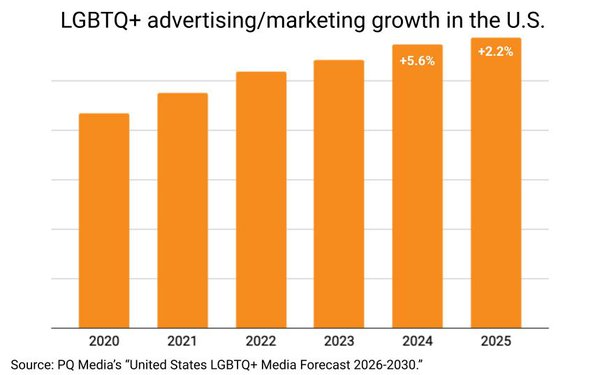
After peaking in recent years, ad spending aimed at LGBTQ+ Americans decelerated dramatically in 2025 as a result of a radical shift in the nation's political climate, finds a new study from media industry economists PQ Media benchmarking the LGBTQ+ advertising marketplace.

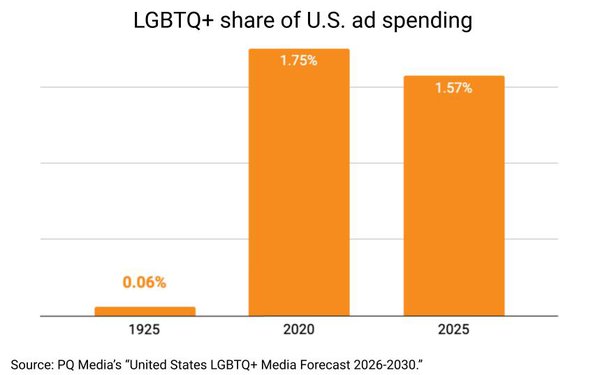
LGBTQ+ ad spending is projected to rise only 2.2% -- less than half its recent growth rate -- in 2025, accounting for $11.73 billion, or just 1.57% of total U.S. ad spending, according to the new report released this morning.

The report, which benchmarks the LTBTQ+ ad market at just $2 million in 1925, or 0.06% of that year's U.S. ad marketplace, peaked in 2023, according to PQ Executive Vice President-Research Leo Kivijarv, noting that it began declining the following year due to backlash and boycotts against LGBTQ+ advertising by major brands as part of a shift in U.S. political sentiment.

advertisement

advertisement

"Brands began to pull back support of LGBTQ+ events, like PRIDE parades, in 2023 following the controversial boycott of Bud Light after it used a transgender actor in its Super Bowl ad," the report notes, adding, "For example, organizations that run PRIDE festivals reported significant declines in corporate sponsorships in 2023 and 2024, which weakened in 2025 due to political pressure on companies to disband their diversity, equity and inclusion (DEI) programs."

“We expected a slight acceleration in growth in 2026 due to the influx of political media-buying, particularly in states with contentious Senate and House races," projects PQ CEO Patrick Quinn, but longer term, the firm is projecting "almost flat growth until 2028."

Longer term, the report projects LGBTQ+ ad spending growth will reaccelerate when the current administration ends.

While the report focuses explicitly on the LGBTQ+ marketplace, PQ's Kivijarv says "overall DEI spending mirrors the deceleration, though there are LGBTQ+ categories that have proven more sustainable, such as HIV-related pharmaceutical brands, among others.
5 comments about "After Peaking In Recent Years, LGBTQ+ Ad Spending Decelerates Under Trump".
Check to receive email when comments are posted.
  1. Dan C. from MS Entertainment, December 9, 2025 at 8:10 a.m.

    So consumer backlash against brands unecessarily pushing social and political issues in 2023 is "under Trump" who didn't get into office until 2025?


    Is it political sentiment or is it people just wanting to buy a product without some faceless brand pushing an agenda that consumers didn't ask for?  The Bud Light / Dylan Mulvaney fiasco started almost two years before Trump took office.  Jaguar's horrific transgender, rainbow, clusterf-ck campaign ran months before Trump got into office.


    Needing to promote this as a decline due to Trump's second presidency without any factual basis or supporting evidence in the article, unfortunately, is what we come to expect of the MP EiC.

  2. Joe Mandese from MediaPost Inc., December 9, 2025 at 8:44 a.m.

    @Dan C. from MS Entertainment: You missed the part where the rate of growth decelerated 61% during Trump's first year of his second term.

  3. Dan C. from MS Entertainment replied, December 9, 2025 at 9:42 a.m.

    @Joe, I didn't miss anything.  Given the headline, a reader would expect some kind of evidence pointing to a Trump policy that led to the decline during his first year in office.


    You are certainly aware that major brands plan about a year out, so any declines would have been planned well before Trump took office, and likely been planned noting how poorly these campaigns had been received by the American public at large.


    The article supports no "cause and effect" of Trump being in office. It's just odd you would use Trump in the headline when there is nothing in the article to present any kind of cause and effect of a Trump presidency.


    In 2023 and 2024, Bud Light, Target, Nike, Adidas, Jaguar, and North Face all faced major backlash because of their idealogical social issue campaigns that were widely rejected.  All under the Biden presidency.  By no means am I stating these campaigns were motivated or implemented because of Biden policies, but at the same time, I fail to see how the decline has anything to do with Trump and everything to do with major brands suffering major consumer backlash over campaigns that were very unpopular.


    MP has a history of publishing polls that state consumers want brands to be more vocal about polics and social issues, yet there is nothing in real world advertising where this has been attempted that supports the results of the polls.


    Finally, based on your chart, you didn't mention that the spending increased during Trump's final year of his first presidency as well.  So Trump presidency does not = cause and effect and mentioning Trump in your headline only serves your personal bias and not an actual cause.

  4. Chris Phillips from realtor.com replied, December 9, 2025 at 9:50 a.m.

    We queer people are just out here trying to live our lives. 

    The LGBTQ+ market represents roughly $1.4 trillion in annual spending in the U.S. alone, according to the National LGBT Chamber of Commerce (NGLCC).

    Brands engage with my community for the same reason they engage any large, loyal consumer base — because it’s smart business, not “pushing an agenda.”

  5. Leo Kivijarv from PQ Media, December 9, 2025 at 10:35 a.m.

    Dan C., I have to disagree with your accessment that brand campaigns are decided a year out. In preparing this report, we interviewed many LGBTQ+ media operators and brands that have advertised and marketed in LGBTQ+ media. We were told in confidence by numerous opinion leader panel member that the Bud LIght boycott was devasting to the LGBTQ+ media. For example liquor brands stopped advertising in LGBTQ+ magazines cold turkey (pun intended) in 2023 after ranking as the 1st or 2nd highest brand category in magazines for decades. The reference to Trump's impact is specific to 2025, as our opinion leader panel members who are media operators lamented at the loss of brand spending compared with previous years, particularly during PRIDE Month, due to the administration's attacks on DEI policies.  

Next story loading loading..