White papers and thought
leadership essays are often so turgidly written that they do more harm than good. Three seasoned journalists have formed an agency to counter that trend: BlueDot Media.
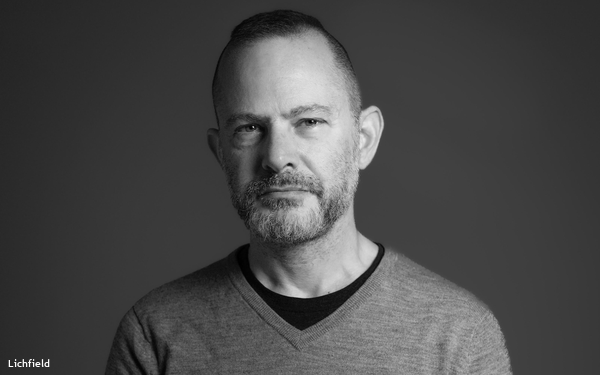
“We're not doing PR, we're not doing advertising campaigns, we're not doing product marketing,” says Gideon Lichfield, a co-founder and leader, and the former editor in chief
of Wired. "We're doing journalism.”
Journalism? How can they call it that when clients review it and have the final say about what goes
in?
“Number one, we hire real journalists who are also continuing to freelance for other publications,” Lichfield answers. “Number two, is that
producing press releases and marketing content doesn't really get you a lot of attention. There's a lot of noise out there. There's a lot of garbage, honestly.”
advertisement
advertisement
But he concedes, “I’m under no illusions—this is for the clients who are paying us to produce the content.”
BlueDot will largely focus on
high-tech “frontier” material.
It will work with freelance writers who are skilled at turning sophisticated ideas into accessible narrative with a point of view and
perhaps some humor.
“Our clients can raise their profiles and improve their authority by having interesting content produced by real journalists that tell
the stories of their field and makes an honest attempt to write about what the trends are,” Lichfield says. “It doesn't suit them to have stuff that merely hues to a party line or a
company line or mainly talks about their product.”
To date, BlueDot has snared clients like Cohere and Writer. For Writer, it has already done a white paper about their
philosophy on AI.
Tech giants like Google usually have teams to create this kind of content. BlueDot will focus on “the small to mid-sized companies that don't have the
resources to have a whole team of journalists and media people in house,” Lichfield continues. “It will be techie to varying degrees, depending on what the client wants and like, who they
want as their audience.”
One must concede that these guys are the real thing when it comes to journalism.
Lichfield was most
recently editor in chief of Wired for seven years, and previously held the same title at MIT Technology Review. Earlier, he was was a science writer and foreign
correspondent for The Economist in London, Mexico City, Moscow, Jerusalem, and New York; and one of the founding editors of the digital news site
Quartz. “In case you can't tell, I'm from the UK,” he laughs. He now works out of Berkeley, California and still writes for Bloomberg and
Financial Times.
Co-founder Stuart Grudgings is a former Reuters bureau chief who has worked with dozens of companies to create newsrooms and
publications; he is based in London.
"Most agencies are still in the output game: producing blogs and basic content," Grudgings argues. "We're creating niche publications
that didn't previously exist, helping companies own their information space rather than compete for attention in crowded general publications."
Why not just use AI to write
content?
“Lots of companies are just using AI to write their marketing or even to write what looks like journalistic articles,” Lichfield concludes. “Our
conviction is that it’s going to be the original, the human-written and the deeply researched, that is going to stand out and get noticed both by search engines and by AI search.”