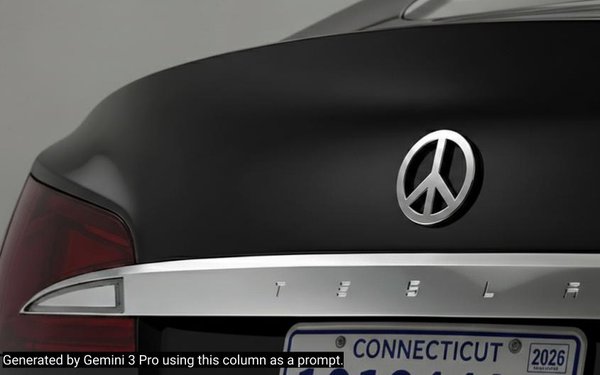
On a recent morning, I passed a
Tesla with a peace sign covering the T logo on the hood. The symbolism was clear - virtue signaling that "I like Tesla, but I don’t like Elon’s politics" – but it felt dated and out
of place, an old story.
The reality is the story was still playing out a mere eight months ago, but nonetheless, it was like seeing a sign in a public bathroom encouraging you to sing happy
birthday while washing your hands. Or stepping on a faded COVID-era social distancing sign in a bodega. It was a relic of the past, something that used to be relevant and is now forgotten.
That pace of change is extraordinary. We’re dealing with a cultural half-life that is materially different to anything we experienced even just a few years ago. Corporate crises
disappear in weeks. not months. Pop culture phenomena rise and fall with dizzying speed. Political upsets quickly stop feeling quite so upsetting.
advertisement
advertisement
All of this is driven by a
highly addictive and always accessible media ecosystem that has changed the way we consume content and which, in turn, has changed the way we process information.
On average, we check our
phones 96 times a day. Average attention spans have collapsed from 2.5 minutes in 2004 to around 47 seconds today. (Allegedly, that number is precipitously lower for Gen Z, which have an attention
span of about 8 seconds.)
And that loss of attention has changed the speed of the news cycle. When we get bored in less than 60 seconds, we need constantly new news to
keep us engaged, and any one story has only so many angles to explore.
In 2018, Google Analytics, in partnership with Axios, determined that the average duration of a major news story was
seven days. Now, that’s a major story mind you, one that you might remember years later – the Thai cave rescue for example – not a piece about a local election race. But although
seven days seems short, 2018 was eons ago -- at least in media industry terms. TikTok had barely been launched – and certainly hadn’t achieved mainstream adoption. If anything, the news
cycle is even more fiercely fast paced now than then.
It’s created something of an "Attention Economy" paradox. We know a little bit about a lot of things, but
don’t remember much about anything. Brands that understand that dynamic can use it in their favor. But doing so requires that marketing energy is deployed in new ways.
The most
striking difference in deployment is in the speed at which brands manage through crisis or lean into opportunity.
Take Cracker Barrel. In 2024, its revenue was flatlining and net income was in
free fall leading to a share price contraction of around 70% over five years. The CEO concluded the company wasn’t as culturally relevant as it had been (probably correct), but rather than
energetically rebuilding that relevance, Cracker Barrel's response was superficial, a rebranding plan – taking "Uncle Herschel" off the logo and redesigning restaurants. Clearly, it flopped and
they have been apologizing since.
By comparison, Chili’s -- another nostalgic dining brand lacking in cultural relevance -- also struggled with flat sales and declining traffic
through 2022 and 2023, but responded with a full-court revamp of marketing, operations, and pricing.
Launching the Big Smasher Burger -- which went nuts on TikTok -- cementing its connection
to the TV Show "The Office," including a new restaurant location in Scranton, bringing back characters in its advertising, launching the "awesome blossom," the "Triple Dipper" (which also went nuts on
TikTok and sold 29 million orders in 2025), while at the same time, dramatically editing its menu down to "fewer things better," and aggressively challenging the fast-food category with new, value
pricing. Guess what, it worked – same store sales were up more than 30% for the year and traffic increased by 20%.
Increasingly, successful marketing requires brands to be
energetic to the point of being over-caffeinated, and to focus on the future rather than being absorbed by the past. Unlike European countries America has always been a-historical as a culture. What
matters is what happens next, not what happened last. And with attention spans careening toward single-digit seconds, the time spent managing past mistakes or missteps is often time wasted.
The news cycle doesn’t stand still. The modern media ecosystem demands new content, and new news. Seven days ago, is ancient history. On the plus side, it means that when your brand is on the
wrong side of a story, if you wait it out it will likely be forgotten. But it also means that without an abundance of full-court energy in marketing and operations, brands can quickly lose
relevance.
As we think about a new year, maybe the best lesson we can take with us is that there’s more value in writing a new chapter than turning a new page. And if proof is
required, look out the window the next time you’re driving through any major Metropolitan area. I guarantee that you will notice how many Tesla Cybertrucks have been pulled out of deep
storage.