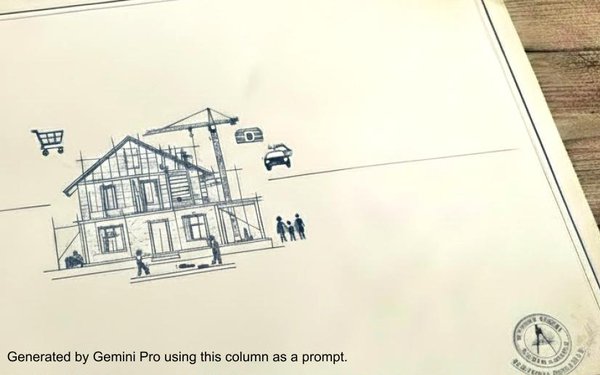
I am occasionally asked what metric I think
is best for keeping track of consumers. There’s no hesitation with my answer. It’s new home starts. Let me explain why.
First, what is it? The metric of new home starts
is exactly what it sounds like—it’s the number of privately-owned homes that began construction in a given period of time. (I prefer monthly.)
In broad strokes, there are two
types—single-unit and multi-unit. Again, these are exactly what they sound like—stand-alone homes and structures with multiple housing units, both apartments and condominiums.
Second, what does it track? The interesting thing about new home starts is that it tracks consumers both attitudinally and financially. Which is to say, both the consumer mindset and the
consumer economy. There is overlap, but these are different things. And the metric of new home starts tracks both.
advertisement
advertisement
Third, what does it tell us about the consumer mindset? Consumer
confidence is manifested in home-buying of any sort, but most especially in newly built homes. Obviously, not everybody is a homebuyer, but the aggregate confidence across all consumers aligns closely
with new home starts, making it a good proxy.
Since new residential construction is driven both by homebuyers commissioning homes and by homebuilders investing in inventory, the
metric of new home starts includes a direct demand component and an indirect supply component. I like this combination.
Homebuilders and residential developers are savvy. They do not
want to flood the market with so much inventory that it undermines pricing. Yet, they don’t want to miss out on a surge in demand either. Additionally, sometimes consumers get ahead of their
financial wherewithal, and sometimes they lag behind. Calibrating all this gives homebuilders a tight finger on the pulse of consumers. Their assessments are reflected in new home starts.
New home starts is not perfect. Sometimes consumers bite off more than they can chew. One such mismatch between confidence and fundamentals triggered the housing bust and the ensuing Great
Recession. But it was demand, nonetheless. Consumers sentiment was strong in the run-up to the financial crisis, which was mirrored in new home starts.
Fourth, what does it tell us
about the consumer economy? New home starts trend up when the economy is good and down when the economy is weakening. It turns out that a sustained decline in new home starts is a strong predictor of
a recession. One comparison by the St. Louis Fed found new home starts to be a much better near-term predictor of recessions than the much-publicized metric of yield curve inversions. (Near-term is
the critical timeframe because every predictor is 100% accurate over a long enough time horizon.)
This makes sense. As people begin to cut back on spending, they cut out big
purchases first, the biggest of which is a new home. When homebuilders see this, they cut back, too.
New home starts are telling in another way. This metric also reflects population
growth. More people mean more demand for housing. As the rate of population growth slows, so, too, will the demand for housing. Again, this is a proxy for a broader dynamic that directly impacts the
strength of the consumer economy.
A Worldpanel analysis of ten years of global FMCG brands found that population growth accounts for half of average annual brand growth. When
population growth is slower, brands must work much harder to sustain growth. Most brands have been unable to step it up, as McKinsey made clear in a 2024 report about “rescuing” brands
from decline.
Finally, what does it tell us about category demand? New home starts are more valuable to the macroeconomy than existing home sales. Because a new home has to be
built.
A new build creates jobs (which in turn create more jobs), adds to the local tax base, and generates new spending on household goods and services. The National Association of
Home Builders has a spreadsheet available on its website that calculates the aggregate contribution to GRP from new construction at 3% to 5%.
This is not just demand transferred from
the renters’ column to the buyers’ column. Buying a home, whether new or existing, is a life stage event that generally means more sorts of consumption, such as new furniture or an extra
car or even the expenses of starting a family, not to mention all the spending it takes to maintain a house in good repair. This is why direct marketers have long paid extra for lists of new
homebuyers—it’s a high-potential target group.
So, that’s my go-to metric: new home starts. There’s no perfect metric, only better or worse. But if I could
take only one with me to a desert island, new home starts is the one I think is better than most.