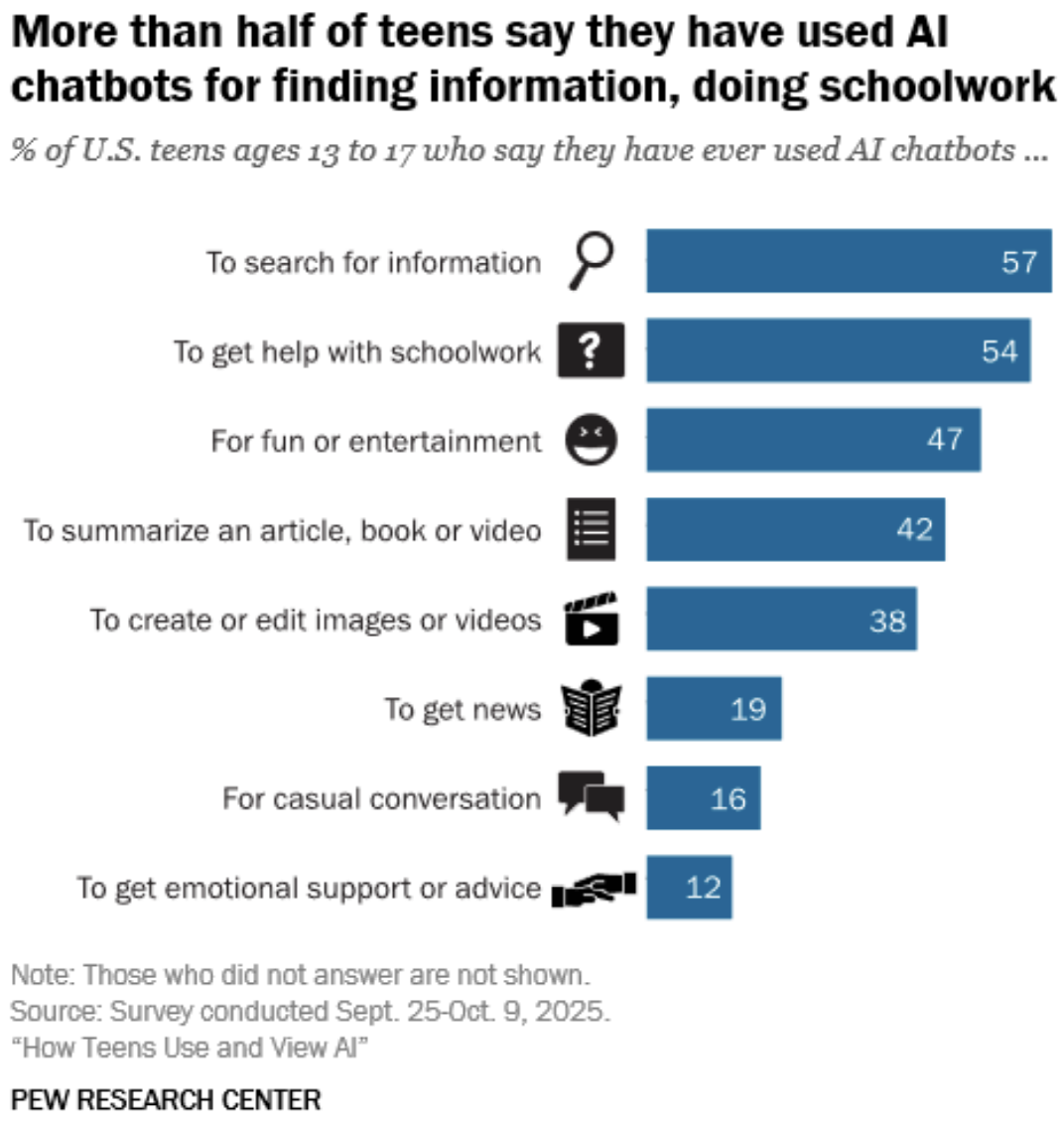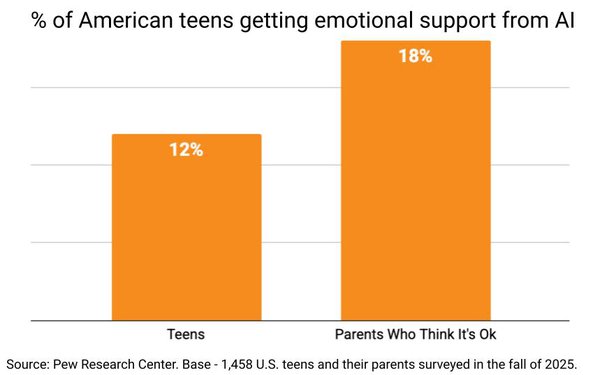
Three years after ChatGPT became available to American teens, 12%
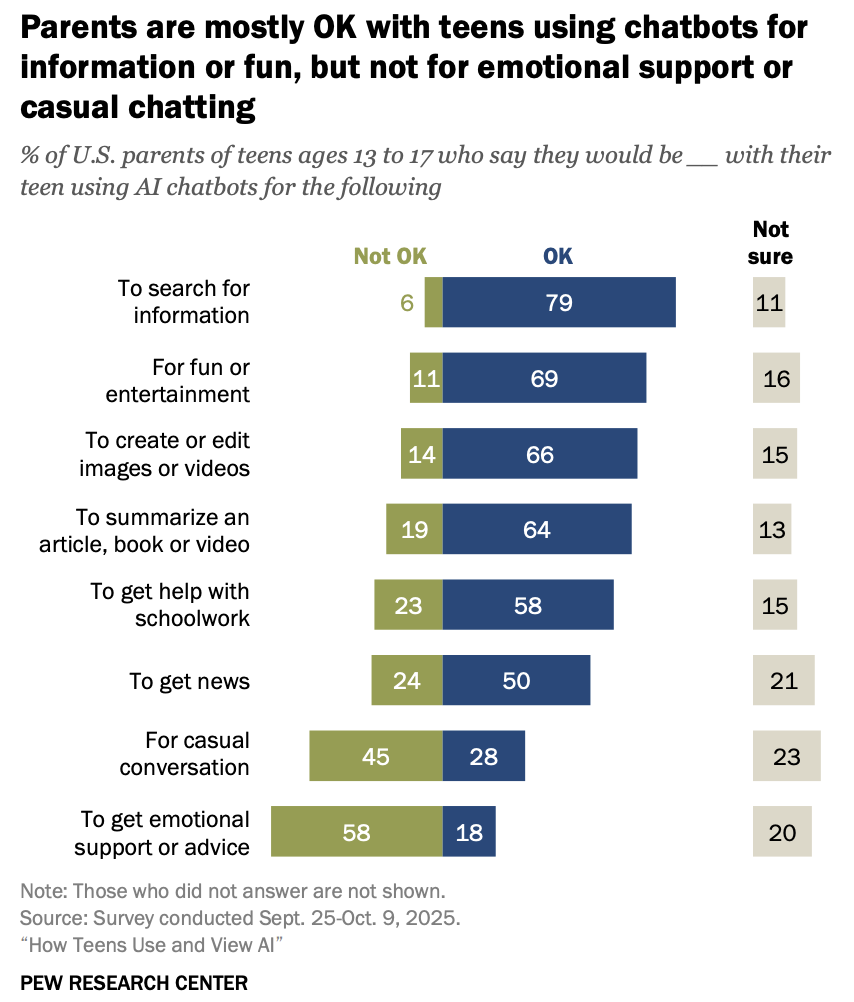
of them are using chatbots for emotional support and/or personal advice, according to new research released this morning by the Pew Research Center. Remarkably, 18% of parents of American teens say
they're okay with that.
The emotional support/advice finding is actually a small part of the new study, but I think it's the one we all need to focus on and think about the long-term
implications of, because this will be the first generation emotionally connected to machine intelligence.
This Pew study did not survey children under the age of 13 -- or their parents -- but
I think that may be even more pressing, because they arguably are more developmentally impressionable, but many of the teens in the study probably began using chatbots in their tween-age years.
As the spouse of a now-retired middle school teacher, I can tell you first-hand how she saw the initial incarnation of ChatGPT impacting the educational learning behavior of American teens. It's
not so much that they were outsourcing homework and papers to chatbots, as it was that they were doing it deceptively.
advertisement
advertisement
Chatbots, and the next generation of agentic AI -- and beyond --
obviously need to be adopted into educational curriculum, and there likely are many positive use cases for the technologies. The bigger issues are how they are impacting the way young people develop,
not just in terms of work ethic and honesty, but their very perceptions of reality in an increasingly AI-generated world.
And if the thing I find most troubling in today's Pew findings isn't
what teens are saying about chatbots, it's what their parents are saying (see bottom), because with little or no regulatory or parental guardrails, what do we expect kids to think?
But for the
reader's of "3.0," I'd like to ask what do advertising, marketing and media pros think as they develop their own plans and strategies for using AI to market to consumers of all ages?
In the
absence of ad industry self-regulatory policies, I'd recommend you start by participating in the Institute for Advertising Ethics "AI Integrity"
program. It couldn't hurt.