Email marketers got a wakeup call this week from
the state of Washington.
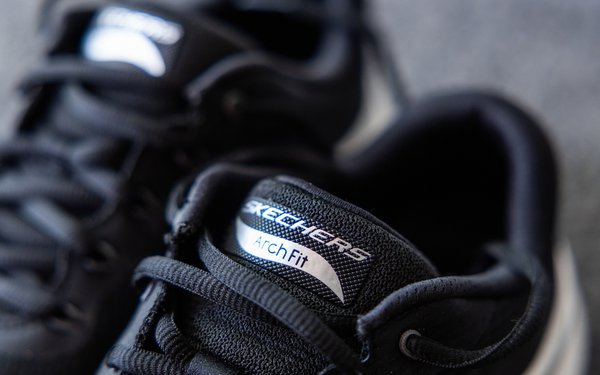
A federal court there ruled that a class action lawsuit against Skechers, the giant sneaker firm, can proceed. As in so many recent cases, the
firm is charged with spamming consumers with emails that created a false sense of urgency with their subject lines.
That is, the emails allegedly
“misrepresented the timing of various sales Defendant was holding and contained false information about the availability of the promotions advertised,” in violation of Washington’s
Commercial Electronic Mail Act, U.S. District Judge David G. Estudillo wrote.
While denying Skechers’ motion to dismiss, Estudilloalso upheld the
removal from state to federal court.
advertisement
advertisement
So now the 2025 case moves on to the next stage at untold cost, including potential penalties.
We have one question:
What’s the damage?
It does not appear that plaintiffs Stephen Liss and Boni Melchor were snookered by a fraudulent email. They were simply annoyed.
However, Estudillo points out, “The Washington Supreme Court has found that the deceptive emails targeted by CEMA
‘harm businesses and individual internet users because [they] take up time, cause frustration . . . and make it ‘virtually impossible to distinguish spam from legitimate
personal or business messages.’”
But how do you determine damages for annoyance, especially when the emails are legitimate? “Plaintiffs note that some
emails they cite are “’simply examples’ of emails Skechers has sent over the years,” Estudilloc ontinues.
And how many emails does it take to
cause an overwhelming level of annoyance?
“According to the Amended Complaint, both Plaintiffs received an email dated May 26, 2025, while Plaintiff Liss also received an
email dated April 9, 2025.” Unless our arithmetic is wrong, that’s a total of three emails between the two of them.
But the judge writes, “The number of
emails Plaintiffs received from Defendant is a factual question the Court will not address at this stage.”
Skechers is a huge enterprise that can take care of itself.
But can smaller companies? There are many cases of this type being filed. The only hope is that mom & pop outfits lack the deep pockets Sketchers has and would not be worth the trouble of
suing.
The case is on file with the U.S. District Court for the Western District of Washington at Tacoma.