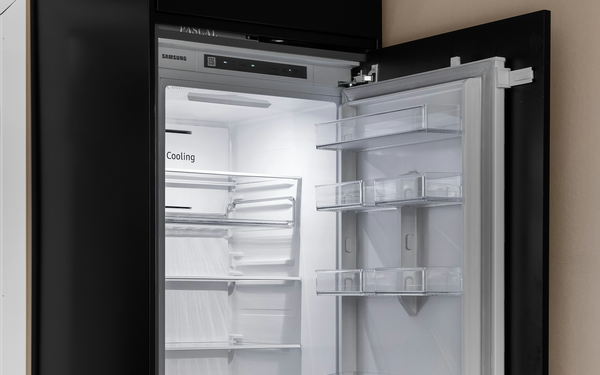
I was recently shopping for a new fridge. All I wanted
was a large metal box that does what fridges are supposed to do: Keep things cold. That should be easy, right?
The answer, as it turns out, is not so much. Refrigerators, and all large
appliances, are now part of a huge consumer conspiracy. We are being hoodwinked, bamboozled, hornswoggled, swindled, duped and fleeced. We, my fellow large appliance shoppers, are sitting passively by
while the proverbial wool is being pulled over our eyes.
And the most frustrating part? We asked for it.
Large appliances are now considered a disposable commodity. They have a shelf
life. They ship with an expiration date, like a carton of milk. The difference is that the expiration date on a refrigerator isn’t stamped anywhere. Nowhere on the packaging does it say
“You might get eight to 10 years out of this fridge -- 12 if you’re lucky. Then it will start making sounds like an Irish banshee and decide to stop cooling on a whim, likely during the
hottest of summer days.”
advertisement
advertisement
Fridges never used to be like that. They used to last through two or even three generations. They were built of the same stuff as army tanks and battleships,
designed to survive the worst a family could throw at it and keep doing what they were supposed to. They didn’t pair with our smartphone, compile a grocery list, dispense iced lattes or remind
us when our water filter needed changing. They simply did what they were supposed to do: keep our food cold so we didn’t die of salmonella.
Somewhere along the line, we have made a
conscious choice to trade bulletproof durability for bells and whistles. That’s true not just for major appliances, but for pretty much any consumer category we can think of. Everything today is
“smart” but also ephemeral. They are designed to dazzle us in the short term, but will soon need to be replaced. And this is all by design.
We bought a fridge about 10 years ago.
It has a water dispenser built in, with a small plastic part that has been replaced twice in the time we’ve had the fridge. Last year, that part broke again, so I went to order the replacement.
I found what looked to be the part I was looking for, but when it arrived, I found that the manufacture had changed the dimensions by about an eighth of an inch, so the part didn’t fit anymore.
It still looked exactly the same, but the water dispenser could no longer be repaired, because the original part I needed has been discontinued.
Tell me that wasn’t deliberate. I now
have a $2,000 fridge that may have to be replaced because a change was made to a little piece of plastic that costs about 4 cents to make.
I’d like to find someone to blame, but
the blame rests with us. We have accepted this questionable bargain with open arms and our whole hearts. Yes, Samsung, LG and the rest of you consumer-conning cabal: Give me that microwave that pairs
with my phone so I can start defrosting a roast while I’m miles from home. Give me an oven I can start by yelling from my armchair, like a sous-chef named Siri. Give me a fridge with an interior
AI cam that keeps a vigilant eye on the doings-on that happen when the door is closed and that little light goes out.
Yes, I need all that! Even if it only lasts for a few years.
If I
need cold food, I’ll get it from the fridge I have in my garage that I inherited from my grandmother. The one she got as a wedding present.