Meet Joe McGillicudy. Joe lives on Mars and has an upside-down
nose, which is fine on Mars, because it doesn’t rain there -- but it is dusty. Upside-down noses work pretty well on Mars.
Joe doesn’t have feet. Instead he has tires. That makes
him fast and very quiet, which is important because Joe likes to sneak up on you and playfully grab your ankle -- and has been known to slip in a quick tickle now and then.
Joe McGillicudy is
a game I play with my four-year-old grandson. We have both contributed to the description above. The upside-down nose was my idea. The tires instead of feet was his. And if you think this all sounds
ridiculous and is a waste of valuable time -- well, that’s really the point. Playing is ridiculous, especially if you’re an adult. But we should do it more.
For the past half dozen
centuries, humans have been focusing on optimizing our lives. This is especially true in the past century or so. Our singular goal is to do things faster, be more focused, maximize our efficiency and
strip every scrap of waste from our lives.
advertisement
advertisement
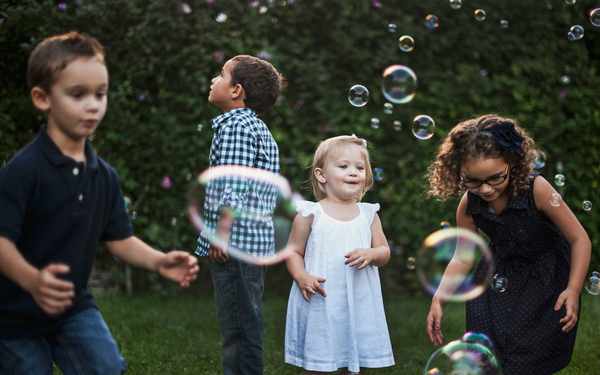
Unstructured play has been the victim in all this. Kids barely do it anymore. And adults certainly don’t do it.
But a certain kind of
playing is important. It creates room for surprise. It engages our imagination in a low-stress environment. It allows us to fail without fatal consequences.
Playing is a real-life sandbox
where we learn how to be better people: more creative, more cooperative, more understanding and more resilient. Most of all, it reintroduces serendipity into our lives. It gives us the capacity to
savor the unexpected.
But play of this kind has some specific requirements. It can’t come with preset goals or pre-made rules. You have to make it up as you go along. This type of play
pries open our imagination and sets our minds loose to wander and free-associate.
In the case of children, it’s the type of play that used to fill our days: building a fort with leftover
lumber from your dad’s workshop and no plan, turning a mound of snow in a parking lot into a kingdom to be conquered, or creating an interstellar spaceship from a large cardboard box.
This type of play is incredibly important for childhood development. But many of the moments children used to spend doing these things are being replaced by time in front of a screen playing a game
that has been prepackaged by a corporation, often with a for-profit agenda.
Children are no longer making the rules for play; they are just following a path that has been set out for them. And
often, they are doing so alone.
In our obsessive quest for an optimized life, adults are even less likely to spend time in unstructured play. One of the best ways to do this is to really play
with your kids or grandkids and try seeing the world through their eyes. Try taking them to a hardware store or thrift shop where there is no intended purchase and let them be the guide. See
what you both discover.
But there are other ways: just wandering with no set destination, doing some creative improvisation through music or art, trying experimental cooking, playing a sport
you’re really bad at (I admit I still have childhood trauma about this one), skipping stones on a lake, or turning a shovelful of dirt over in your garden and seeing what crawls out.
Even better, find ways to play with others: telling jokes and stories, going dancing, tossing a ball around, or having a snowball fight.
I know -- all this sounds like a complete waste of
time. And again I say, that’s the point.
As we rush to be productive, our brain gets overtrained for task accomplishment. If you looked at a brain “at play” it would
look very different than one playing a video game or scrolling a social media feed.
Many of the ways we currently choose to spend time with a screen light up the same areas of the brain that
are engaged when we’re gambling or engaging in other addictive behaviors. Some free-time screen activities have even been shown to trigger anxiety and depression.
The biggest difference
between unstructured play and many of our current pastimes comes in the way we’re rewarded. With unstructured play, the rewards come from inside us. We are not collecting points, climbing to the
next level or competing for a bonus determined by some external party. We’re just doing whatever we’re doing for fun.
You might just find that wasting time is the best way you can
spend time.