Paid media has blown up to a staggering $1.15 trillion global beast. It is therefore timely and relevant that the World Federation of Advertisers and media effectiveness consultancy Ebiquity have
issued the “2026 Paid Media Effectiveness Handbook.”
The handbook sadly confirms that despite having more data than we know what to do with, most brand owners are still essentially
flying blind. Two-thirds of companies are lagging way behind on measurement maturity, and a depressing 15% actually use effectiveness as the primary driver for setting their budgets. The rest? They
are default-budgeting based on vanity metrics, or see 54% of their analytics roll in long after the big investment decisions have already been made.
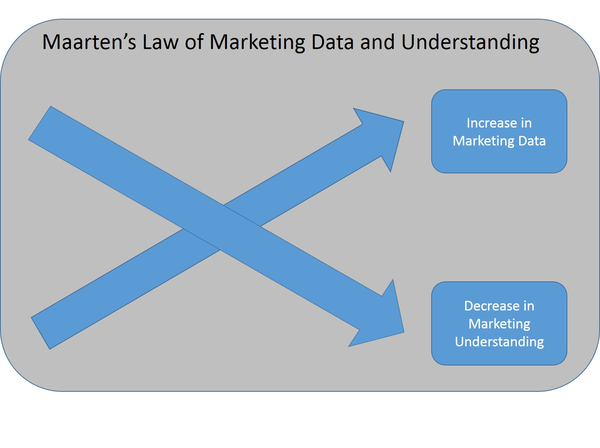
This means Maarten’s Law of Marketing
Understanding is as relevant today as when I introduced it in 2013. That is: With every increase of data available to marketers, our understanding of what it all means decreases by the same
amount.
advertisement
advertisement
So what's a marketing
organization to do? If I could give you one piece of advice, it would be: Match your refresh cadence to your business decision cadence, not your curiosity.
Learning phases typically need seven
to 14 days and roughly 50 conversions minimum before an algorithm can separate signal from noise.
The single most expensive mistake documented across Meta/Google guidance is "premature
optimization." You solve for this by setting a clear and realistic threshold before launch, not after you're staring at a random “bad” number.
Minimum viable test duration is
consistently four to eight weeks, long enough for the square-root-of-time noise-cancellation to work and to absorb a seasonality cycle. Cutting a geo-test short is the classic "too early" failure:
underpowered tests produce false positives that look decisive.
Building mix modeling needs years of history, but refreshing is a different question. Best practice has moved from quarterly
toward monthly (with some vendors pushing weekly), because quarterly-only refreshes in fast-moving categories mean you're making live decisions on data that's already three months stale. The
counter-risk: Refreshing weekly on a two-year dataset barely moves the model, and just adds review overhead without adding insight.
If budget moves quarterly, a monthly mix modeling refresh
with quarterly action is right. Refreshing weekly just generates more opportunities to overreact to a single data point without a matching decision to make. If your category moves fast enough that
quarterly is genuinely stale by the time you act, that's a signal to shorten the planning cycle, not just the measurement cycle.
And finally (and probably most importantly): Brand tracking is
deliberately slow by design. This is a case where "too early" is most damaging, because a single soft quarter of brand tracking data next to a strong short-term sales number will always lose the
argument for short-term budget, unless your company has pre-committed to a longer window.
One more thing: The handbook leans heavily on creating formal workflows, rigid governance rhythms,
structured alignment on choosing the right metrics, and introducing an internal "translator" role to bridge the divide between marketing and the CFO's office. All these are important, but they
underplay the messy, politically charged reality of corporate power dynamics, where short-term trading pressures and procurement routinely overrides long-term.
By focusing so intensely on
checklists, the handbook risks giving marketers a false sense of operational security, implying that neat processes can solve a deep-seated cultural alignment problem that actually requires true
leadership, commercial bravery, and a fundamental rewiring of how a business (not just marketing!) defines the value of its brand.