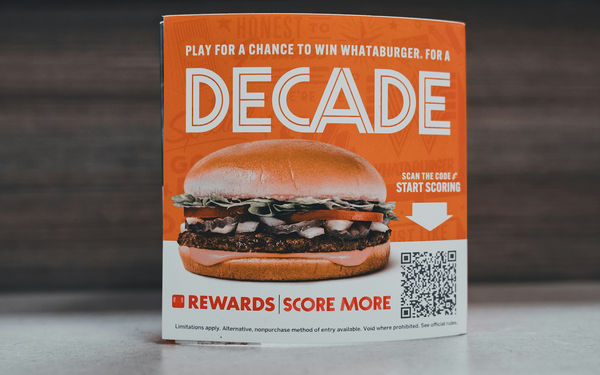
As QSRs continue to go all-in on loyalty programs,
they’re getting support from tech provider PAR Technology Corp.’s most recent report.
The 2026 Quick Service Restaurant Operational Index Report revealed that loyalty transactions
grew more than 28% since last year, while anonymous transactions fell 6.7%. The increase marks one of the first times loyalty members actually outspent anonymous customers, averaging $15.08 per visit
versus $14.82 for non-members.
The report was based on aggregated, anonymized data from more than 30,000 QSR restaurants, which represent 149 million unique loyalty guests and $26 billion in
loyalty sales for 2025.
“The most successful QSR brands are the ones that connect operational performance with guest engagement,” said Savneet Singh, CEO of PAR Technology, in a
release. “Our data shows that when loyalty, operational efficiency, and channel strategy are aligned, brands are better equipped to drive revenue while managing rising cost
pressures.”
advertisement
advertisement
The report defined a subset of customers with more than 10 QSR visits a year as “super users,” which were found to drive a whopping 61% of check-ins and 53% of
sales for QSRs.
New reward membership signups also increased member traffic up to 38% within the first 90 days of membership.
But the drive-thru still remains king: 51.7% of
total sales were made to car-bound customers, while kiosk purchases increased 35% YOY.
Third-party delivery services also delivered the highest customer check totals, at an average of $22.73
per person, which is 61% above the average of all other channels. And customers are more than willing to pay for the convenience of delivery: up to 78% more at breakfast, 61% at lunch and dinner, and
39% late night.
Yet the number of mobile first-party orders directly with QSRs fell 2.9%.