I play golf, and I love the
Callaway brand. It’s the only brand of clubs and balls I ever play with, so it's a little uncomfortable to write a column about the recent Good Good social media ad mess from a couple of
weeks back. Diving into my thoughts on this one, I realized Good Good made a huge error and Callaway also made a mistake -- but fundamentally, this was an error of process as well as judgment, and one
that could have been avoided with some strategic process. It’s a process most marketers need to pay attention to.
In case you missed it (unlikely, given how fast this traveled),
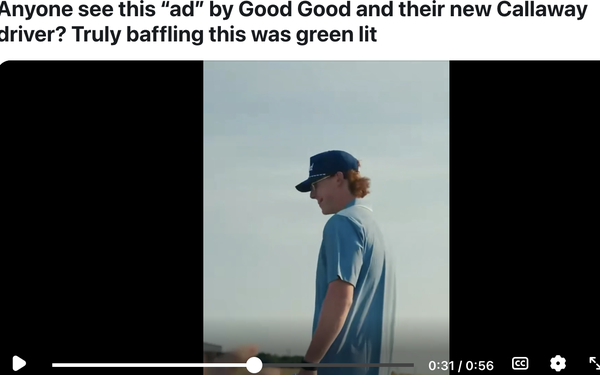
Good Good Golf and Callaway put out a co-branded ad for a new driver in which the Good Good co-founder shoves a female golfer to the ground and tells her not to touch his club. It went live Aug. 21
and came down the same day, which says a lot. A man forcibly shoving a woman to the ground and berating her is not a good look for any brand, and any marketer should have known this.
advertisement
advertisement
The
fallout was fast and brutal. Callaway apologized, said it had approved the ad, and launched an internal investigation into the origin of the snafu. It also ended a three-year partnership with Good
Good and committed a meaningful donation to organizations that address violence against women. Good Good's CEO and president both left the company within about two weeks of the ad going up, with the
co-founder stepping in as interim CEO. Retailers pulled Good Good apparel from shelves. A media partner reportedly scrapped a show reboot it had planned with the company. A PGA Tour sponsorship got
dropped.
That's a lot of consequences for something that lived online for less than a day.
Somehow, this ad passed through at least two sets of eyes at Callaway and Good Good who
presumably knew what their brands stood for, knew their audience, and still didn't flag a man tackling a woman and berating her as a problem.
The main process question here: Did anyone show
the ad to a single person outside the room where it was created before it was published?
I think what probably happened is that a small group of people created the ad, and then they became the
approval team. They did not run it up the flagpole for approval. They did not seek input from research. I can’t imagine legal looked at this ad.
That's the trap of
trying to do humor. It's the hardest creative territory to get right because it requires you to correctly predict a stranger's reaction. The people evaluating it in the room are, by definition,
not strangers. They already knew the intent, and by being in on the “joke,” they are not the people who should be evaluating it..
We have never had a faster or cheaper way to find
out how an idea lands with people. A small digital focus group certainly helps. Five people outside the agency and outside the brand team, with no reason to be polite about how they may respond, would
have flagged this one quickly.
I don't think this is really a story about one bad ad, even though this was a genuinely bad ad. I think it's a reminder that speed and confidence aren't
strategic values. You need testing and rationale. The people closest to an idea should not judge whether it’s a good idea.
The only thing that has to change is having someone in
the room willing to ask the question before it goes live. That’s the way to avoid a career-ending, brand-murdering ad like this one. It made Good Good a bit of a joke, and a brand unlikely
to recover.