KYIV, UKRAINE -- I am writing from here, where as you might expect, war
is front-and-center in many conversations.
In this, my 18th trip to Ukraine in just over three years, a lot of people are talking about "Cognitive War," a rapidly-emerging concept in the war
and one quite familiar to the media industry, even if not by name.
Cognitive is a new domain of warfare beyond traditional kinetic ones of land, sea, and air, as well as newer entrants of
space and cyber.
According to the North American Treaty Organization (NATO), cognitive war targets brains, using technology and network systems to manipulate cognition and change thoughts,
preying on individuals’ psychological biases and reflexive thinking to cause negative impacts.
We know that domain well. We call it media and advertising (though all can fairly object to
the implied assumption of “negative impacts”).
advertisement
advertisement
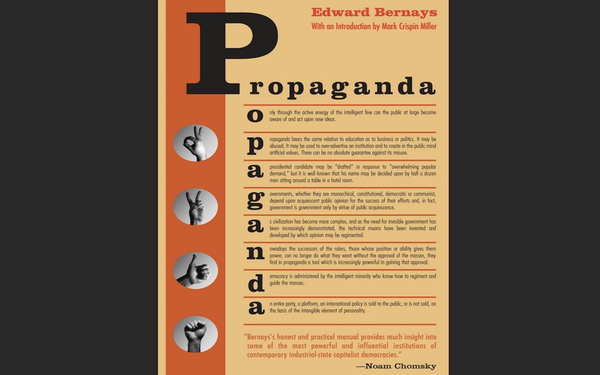
In 1928, Edward Bernays, a nephew of Sigmund Freud, wrote the book “Propaganda,” detailing for the world how new psychology theories could
be combined with mass publishing and broadcast radio to transform how people’s opinions were shaped and enable small groups of people to influence the opinions and actions of the masses.
Bernays used those approaches to try to make President Calvin Coolidge accessible to Americans, to de-stigmatize smoking among women and, unwittingly, to help Joseph Goebbels and Hitler.
Goebbels, a devoted follower of Bernays’ writings, became the Nazi Reich Minister of Propaganda and used his techniques in Germany in the 1930s to manage mass behavior, manufacture public
consent, and construct a cult around Hitler.
We all know well these techniques have evolved continuously with the growth of digital and social media. Having watched domestic divisions within
nations -- on topics like immigration, religion and sexuality -- driven to polar extremes by external actors leveraging the openness of western digital platforms and payment systems to deliver
targeted inflammatory messages designed to both ignite and add fuel to sensitive fires, to widen internal divisions and to undermine alliances.
As with most things today, AI only accelerates
these nefarious capabilities and their impacts. We saw this recently with sophisticated social video campaigns related to “mass immigrant invasions” in Spain, to immigrant videos in
Germany targeted to nationalist-leaning individuals and Ukrainian immigrant fear-mongering messages targeted to nationalist-leaning Poles.
Many bear the signature of Russian digital studios
such as RT, as do some of the recent anti-Israel and anti-American messaging linked to Iran, which apparently leverage Russian capabilities and experience here as well.
AI is helping them
create more campaigns, faster, cheaper and with more effective impact than ever before possible. And AI also helps foreign actors better hide their tracks.
We need to pay attention here and be
vigilant.
We in media and advertising know how these technologies and platforms work.
We need to watch for abuse and call it out.
We need to care.
Protecting people
from manipulation matters. We have self interest here. Advertising is generally not a great business in most autocracies and, critically, we need to prevent the creation of future Joseph Goebbels in
this world and the horror they can perpetuate.
Yes. I know you were probably not looking for yet one more thing to worry about in the world, but this one really matters and we all can
help.