Virginia officials are reiterating their
request to immediately enforce a new state law that would require social platforms to verify users' ages, and prohibit minors under 16 from accessing social media for more than one hour a day without
parental consent.
U.S. District Court Judge Patricia Tolliver Giles in Alexandria ruled in March that the statute (SB 854) likely violates the First Amendment, and issued an injunction that prohibits the state from enforcing the law against any members
of the tech group NetChoice -- including Meta Platforms, YouTube, Reddit, and Dreamwidth.
"SB 854 was enacted as a careful and reasonable response to the social media addiction
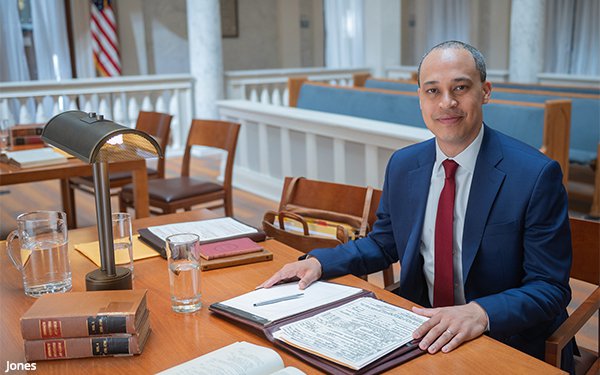
epidemic plaguing its youth," Virginia Attorney General Jay Jones argues in a May 1 filing urging Giles to pause the injunction.
advertisement
advertisement
"Yet under the preliminary injunction -- and
unlike with other addictive products that harm Virginia’s children -- the Commonwealth cannot regulate the social media platforms causing these harms. That is extraordinary, and extraordinarily
harmful to Virginia," he adds.
The filing comes in a battle dating to November, when NetChoice sued to block the law, arguing it would cause "an irreparable loss of First
Amendment freedoms on a massive scale."
The measure, passed last year, had been slated to take effect January 1.
NetChoice argued that law would wrongly
restrict minors' access to a wide range of content -- including educational and religious material.
"SB 854, for instance, would bar a 15-year-old from spending more than one
hour a day on YouTube watching online church services, even if the minor does not spend time on YouTube otherwise," NetChoice writes. "It would prevent a 15-year-old interested in becoming an attorney
from watching proceedings in the Fourth Circuit, which streams its oral arguments live on YouTube.
Virginia countered that the statute represented a "reasonable and
common-sense" approach to combating "excessive" social media use.
Twenty-nine attorneys general backed the law, arguing in court papers the statute is "narrowly tailored to
address Virginia’s compelling interest in protecting kids."
The attorneys general also argued that teens under 16 have "more limited" First Amendment rights than older
teens, and that states "have an even greater interest in protecting them because they are more vulnerable to the harms posed by platforms."
Giles sided with NetChoice, ruling
that the parental consent requirement would interfere with minors' free-speech rights to read and communicate online, and that the age verification provisions would hinder people of all ages from
accessing speech.
Virginia appealed the injunction to the 4th Circuit Court of Appeals and sought an order staying Giles' order while the case proceeded. That court rejected the request last month because Virginia had not asked Giles
for the stay.
Soon after the appellate court refused to pause the injunction, Jones returned to Giles and asked her to issue a stay.
NetChoice opposed
that request last week. The group wrote in papers filed April 29 that its members "would suffer immense and irreparable harm" if the injunction was paused.
"Without an
injunction, NetChoice members would be forced to choose between exposing themselves to massive liability for disseminating speech, or taking burdensome steps that would drastically curtail access to
their services," the group wrote. "Either way, millions of Virginians could be cut off from vital channels of communication, education, and self-expression. This Court got it right when it enjoined
Virginia from enforcing SB854 during the course of this litigation."
Giles hasn't yet indicated when she will rule.