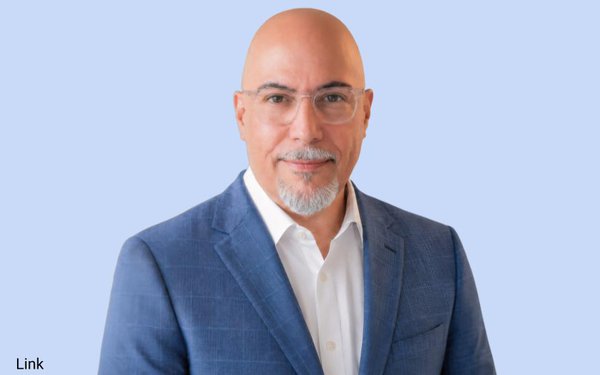
In advance of the
ANA In-House Agency Conference (June 22-24 in Huntington Beach, CA), I spoke with David Link, Chief Creative Officer of Saatva and a speaker at the event, about the in-house creative
process.
Bill Duggan: What most excites you about the ad industry in 2026?
David Link: What excites me most is how much
faster and more fluid the creative process has become. We’re moving beyond the old model where great work required layers of outside agencies, long timelines, and huge production budgets. With
AI, stronger in-house teams, and smarter production models, brands can now create at a much higher level, much more consistently.
For us, that means producing premium creative at
scale without losing the taste level, craft, or brand consistency that makes the work feel elevated. I also think the industry is shifting away from simply buying impressions and toward making work
that feels more relevant, more useful, and more connected to how people actually live. That’s exciting because it puts the focus back on where it belongs: on great ideas, great storytelling, and
the ability to move quickly.
advertisement
advertisement
Duggan: Tell us about Saatva House.
Link: Saatva House is one
of the most important creative investments we’ve made. It’s not just a place where we shoot. It’s really become the center of our creative operating model.
We lease
a huge luxury home in West Hollywood for a flat monthly cost, and it gives us a controlled, beautifully designed environment that fits the world of the Saatva brand. That means we can shoot TV,
social, product, photography, retail content, podcasts, and partnership content without having to start from scratch every time.
But it’s also more than a production location.
We use it for off-sites, affiliate and partner events, podcasts, creative meetings, and as a workspace for our Los Angeles team. It gives us speed, consistency, and control. Instead of waiting weeks
to coordinate locations, agencies, and crews, we can move quickly, make decisions in real time, and get high-quality work into market much faster.
Duggan: Give us an
idea of the scale of your in-house work. How big is your team? How many deliverables in a year? What types of work?
Link: The scale is something I’m really
proud of, because it proves that a lean, senior team can produce a tremendous amount of high-quality work when the right model is in place. Our creative department is 16 people, and it’s
intentionally built with senior-level talent. That makes a big difference. Senior creatives bring better judgment, faster decision-making, and the ability to solve problems without endless rounds of
review.
Within that, our core in-house video team is only six people. But in a single year, working out of Saatva House, we produce five to seven TV spots, more than 100 social
videos, eight to ten photo shoots, retail store videos, out-of-home assets, B2B content, and a podcast series.
Saatva’s in-house creative work now spans TV, streaming, paid
social, organic social, retail, print, out-of-home, email, digital advertising, and brand partnerships. The difference has been dramatic — not just in how much more we’re producing, but in
the quality, consistency, and creative control we’re able to bring to every project.
Duggan: Please discuss your influencer marketing work.
Link: We’re approaching influencer marketing in a very intentional way. We think about our social ecosystem across three streams: organic, paid, and influencers. Each
one plays a different role, but they all need to ladder back to the brand. With creators, we’ve been testing different levels of collaboration. Sometimes we let a creator make content with very
little creative direction from us. That can feel a little less polished or less traditionally “Saatva,” but it can also feel very authentic to that creator’s audience, which is
important.
Other times, we collaborate much more closely so the work feels more aligned with our broader brand work and customer base. The key is knowing when to step back and when
to lean in. We also recently brought on a very talented director of influencer strategy to scale the program more efficiently and strategically.
Duggan: What are the
KPIs for your team? Where does cost savings fit in?
Link: At the end of the day, revenue is always the most important KPI. But we also look at search volume, brand
favorability, perception shifts, earned media value, and overall creative performance across channels. From an operational standpoint, efficiency is one of the biggest measures of success. The old
agency model can be very expensive, especially when you’re paying big markups and constantly bringing in outside teams that need to relearn the brand every time.
Before we
built our in-house model, producing premium creative at scale was far more dependent on outside partners, larger budgets, and longer timelines. Today, we have a more efficient creative engine that
gives us greater control over the work, more consistency across channels, and the ability to produce a much larger range of high-quality content with far more agility.
So, for a
modest increase in total investment, we’ve gone from producing one TV spot and a handful of social videos to producing multiple TV spots, over 100 social videos, photo shoots, retail content,
podcasts, and much more. We’re saving millions of dollars a year while producing exponentially more work. And just as importantly, the work is more consistent, more on-brand, and faster to
market.
Duggan: How is your team using AI?
Link: AI has become a real multiplier for us. We’re not using it to replace
people or shortcut the creative process. We’re using it to give talented people more speed, more range, and more room to explore. Across the department, AI is helping us move faster in the early
stages of ideas — from research, writing, concept development, and storyboards to visual references, bedroom design explorations, and lifestyle imagery. It allows us to see more possibilities
before we commit to a direction, which leads to better thinking and better creative decisions. We’re also using AI to improve the way work gets made. It helps with retouching, video effects,
voiceover exploration, workflow automation, and creative testing. In some cases, it speeds up tasks that used to take hours or days. In others, it helps us learn faster by giving us more ways to
evaluate what is working creatively and what is resonating with customers. For me, the most exciting part is that AI removes friction. It lets the team try more ideas, visualize them faster, and
refine them earlier. The human part still matters most — taste, strategy, emotional intelligence, and storytelling are what make the work great. AI simply helps us move with more speed,
intelligence, and flexibility.
Duggan: See you in Huntington Beach, David.