The good news might have been that
Nike’s fourth-quarter sales and profits came in better than many expected. But any smiles those numbers evoked got wiped out by bigger, uglier revelations, including a discouraging forecast for
China, persistent trouble at Jordan, and an unrelenting freefall at Converse.
For its fiscal fourth quarter, revenues fell 1%, reaching $11 billion. And for the full year, sales came in flat
at $46.4 billion. Net income shot up to $1.07 billion, from $211 million in the comparable quarter a year ago, and declined 3% for the full year, easing to $3.1 billion.
Those numbers, above
Wall Street consensus forecasts, came along with other nice surprises. With its fifth consecutive quarter of double-digit gains in Nike Running, the athletic giant added $1 billion to its business.
Sales trends in North America -- a major concern as U.S. consumers cooled on the brand -- are up again, rising 3%. And a modest tariff refund should help profits.
advertisement
advertisement
But there were plenty of
disappointing results as well. The long-promised recovery in China, which accounts for 11% of total sales according to Morningstar, didn’t materialize, and sales fell 17%.
Revenues for
Converse were $244 million, down 32% in all regions. For the full year, it declined 31% to $1.2 billion. And apparel problems persist, with the company acknowledging ongoing challenges in Nike
Sportswear and Jordan Streetwear.
Nike lowered demand creation expense by 4% to $1.2 billion, as it cut brand marketing expenses. And in its earnings call for investors, Elliott Hill,
president and CEO, called out changes the company is making: “We’re out front rewriting our marketing playbook.”
That means thinking less in terms of one big campaign and
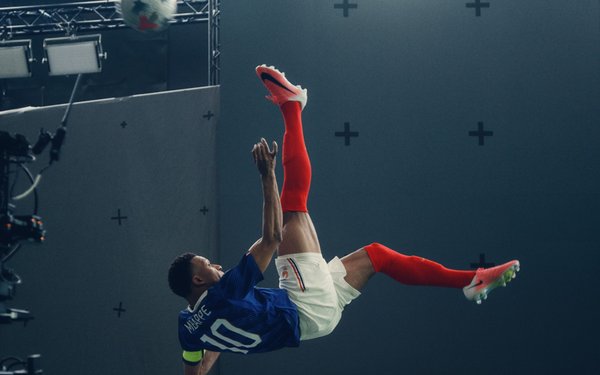
more as a modular ecosystem. Hill cited the “full Nike Football universe" as an example and explained how the company turned 31 Polaroids representing World Cup teams into a long-form
“Rip The Script” effort, then sliced and diced it into a network of entry points. It’s how Nike believes younger consumers want to engage, "discovering, sharing, and participating in
the story as it unfolds."
The strategy is working, he insisted, noting that Nike’s stories earned 1.5 billion views by the first week of the World Cup. Changes at Nike’s scale,
however, “take time.”
Investors are not feeling very patient. The stock, which traded near $180 a share at the height of the pandemic, has fallen as low as $40 per share.
While Hill’s “Win Now” transformation plan, launched 18 months ago, has brought cost reductions, more efficient inventory management, and a reorganization to align product
development and marketing around athletics, writes David Swartz, who follows the company for Morningstar, “improvement in results has been limited.”
He still believes “Nike
retains its brand advantages in global sportswear.” But he also thinks a return to mid-single-digit yearly sales growth is as long as three years away.
Brian Nagel, an analyst who
follows Nike for Oppenheimer & Co., writes that Nike seems more resigned to treating 2026 as a restructuring year, with still-soft results, some due to the transformation efforts and some to
global macroeconomic challenges.
“We continue to look favorably upon longer-term repositioning prospects for Nike and the brand,” he writes, but with “subdued
expectations,” is encouraging investors to stay on the sidelines until there are clearer signals the turnaround is working.