For a rare disease, spinal muscular atrophy (SMA) -- a genetic
neuromuscular condition that, when left untreated, can cause progressive muscle weakness -- is getting lots of attention from Big Pharma companies.
Last month, Novartis expanded its year-old
“SMAshing My Limits” non-branded awareness campaign through a
team-up with Becoming rentABLE, a five-year-old firm that’s sort of an accessible version of Airbnb or Vrbo, offering short-term rentals to travelers with disabilities.
At the same time,
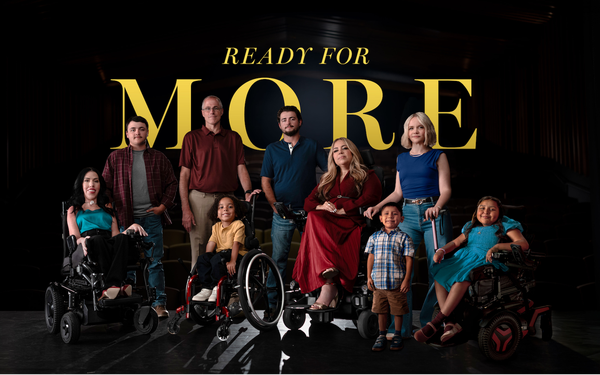
Biogen launched “Ready for More,” a branded launch campaign for a higher-dose regimen of its Spinraza treatment for SMA.
To learn more, Pharma & Health Insider spoke
separately with Dr. Tracey Dawson, Novartis’ U.S. therapeutic area head of neuroscience, and Sundip (Sunny) Raval, Biogen’s vice president, head of marketing, rare diseases.
advertisement
advertisement
Raval
traced the attention now being paid to SMA back to Biogen’s introduction of its lower-dose Spinraza 10 years ago. “It was incredibly transformational,” he recalled. “We went
from worrying about babies dying to ultimately enter an era where we’re not in survive mode, but in optimize mode.”
Raval acknowledged that one of the goals of Biogen’s new
campaign is to “help people who have left Spinraza reconsider it as something they may want to try again.”
Two other goals: “encourage people to learn more, talk to their
physicians, and switch from low-dose to high dose” and “position Spinraza as the most effective drug in the category.”
With the intro of Spinraza’s higher dose,
he said, “we saw an opportunity to reclaim our place in the efficacy realm.”
“Ready for More,” created by the McKinney agency, shoots “real patients with
incredible stories” from a low angle to make the campaign “more relatable to the community.”
Still in its infancy, the (ongoing) campaign, so far has consisted of photos and
stories on the web and social media, but Raval promises paid digital media and more over the coming year.
“We as an industry have met and rose to the challenge of keeping patients
alive, going from an era of survive, then to thrive, and now to optimize where there are multiple treatments available. What can we do for babies, teens and adults to help drive even more efficacy and
make life even more meaningful?”
For Novartis, making life more meaningful for SMA patients includes giving them the opportunity to find accessible short-term rentals when they go on
vacation.
“We aim to add approximately 100 new short-term rentals to the existing network of homes already available on Becoming rentABLE,” Dawson said. “Within these new 100
rentals, at least 25 of them (will be) experience-based homes -- ranging from cabins, tree houses, yurts, domes, canvas tents, or cottages near state parks and/or accessible beachfronts.”
The new “SMAshing My Limits and Going Places” campaign, which includes both paid and organic content on Facebook, Instagram and the web, focuses on Cory Lee, a travel enthusiast with SMA who
writes the “Curb Free with Cory Lee” blog.
“He is highlighting what it means to have accessible experiences,” Dawson
related. “Can he maneuver, can he get into the house, can he live a normal life, can he sit with friends and have dinner and so on?”
This builds on the original “SMAshing My
Limits” concept, she said: “For people living with SMA, everyday activities are hard,” and the same goes for travel. “We want to be the partner for those who want to achieve
more in their daily life.”
The travel angle for the new campaign, Dawson continued, sprung out of conversations with SMA patients which conveyed “there’s very few rentals out
there for people living with disabilities. While there are one and half million short-term rentals, less than 1% of them have accessible housing.”
“People living with SMA want to
achieve the things that you can I take for granted,” she said. “This is a natural evolution of that.”
“While SMA is a rare disease,” she added, “the
solutions we are championing have a much wider impact. By working with Becoming rentABLE...we are directly addressing a critical barrier for the SMA community while also creating a lasting, scalable
benefit for the broader disability community.”