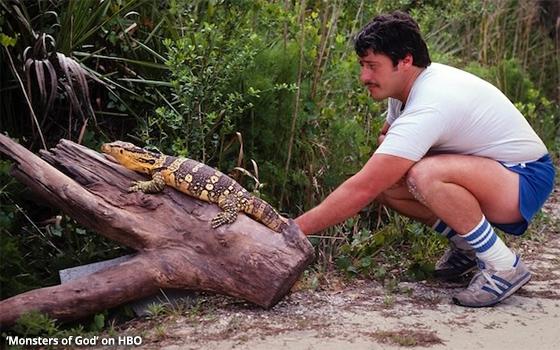
A new documentary series about illegal reptile
trafficking revives memories of another documentary about eccentric, fanatical owners of wild animals from a lifetime ago.
That show was “Tiger King,”
the 15-part Netflix docuseries about people who keep wild animals such as tigers and lions on private property.
The “tiger king” of the title was a man named Joe Exotic, who for a very short time, became nationally famous as the show became a much talked-about lockdown hit in the first
weeks of the COVID pandemic in March 2020. Remember that?
Now, the maker of “Tiger King” is back
with “Monsters of God,” a five-part look inside the world of exotic reptile smuggling coming to HBO and HBO Max this week.
advertisement
advertisement
The filmmaker is Eric Goode, who admits in Episode One of “Monsters” that he himself has had a lifelong fascination with reptiles and reptile
collecting.
Like “Tiger King” -- and the docuseries Goode made between the tigers and the reptiles, “Chimp Crazy” -- the access and
cooperation that his interview subjects gave him to document their lives and dubious careers is jaw-dropping.
In this case, the subjects are older men
reminiscing about their exploits in the world of global black-market trading in reptiles.
As a counterpoint to their tales, other interview subjects include
the law enforcement agents and officials who battled these wildlife smugglers.
In “Monsters of God,” the reptiles run the gamut of basically
every species of snake, lizard and turtle on the face of the planet.
The documentary positions the problem of the international exotic-animal trade as a
business that is worth billions of ill-gotten dollars.
At one point in Episode One of the series, the claim is made that the international trade in wild
animals of all kinds, including reptiles, has plundered various species to extinction.
The documentary also alleges that some of the illegal wildlife
merchants’ best customers have been big-city zoos, including the National Zoo in Washington.
Goode’s incredible access into the lives of his
subjects is astounding in its candor. Some of them are still in the business of selling reptiles, but by all appearances are conducting their animal-selling legally.
Their lifestyles are not unlike those of the animal collectors in “Tiger King.” In both shows, the dealers live remotely on dusty, parched parcels of land where their
“merchandise” lives in pens surrounded by fencing.
Aspects of the care and feeding of these animals are gross, such as the scene in which one
reptile enthusiast collects dead animals run over by cars and then feeds this carrion to a pet alligator.
“Monsters of God” will not likely draw
the same level of attention as “Tiger King,” since that show emerged just at the moment when Americans afraid of COVID shut themselves up at home with little to do except watch
television.
But “Monsters of God” is just as good, if not better. Like great television is capable of doing, but does not do enough,
“Monsters of God” takes us to places we would never go ourselves, or in this instance would not want to.
But Eric Goode has done it for us, and
brought back from his travels a documentary series that is one of the best TV shows of the year.
“Monsters of God” premieres on Thursday
(August 6) at 9 p.m. Eastern on HBO and HBO Max.