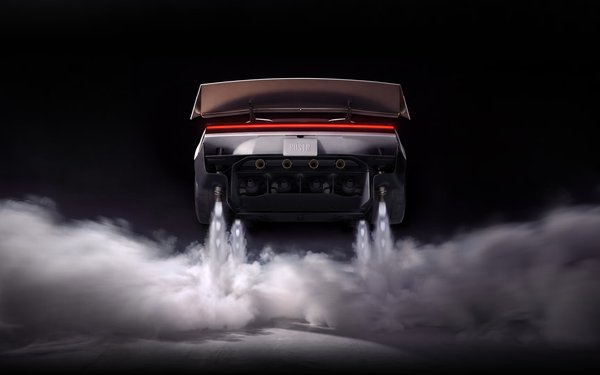
Tesla finally showed the world its
Roadster, and predictably, the flying-car theatrics proved as polarizing as everything else Elon Musk does.
The long-delayed demonstration dazzled many in the Texas audience as the Roadster
drove vertically up a ramp and -- powered by cold-gas thrusters -- did a kickflip over a lineup of Teslas. But others quickly pointed to what they call classic Musk sleight of hand, with few details
on price, timing or actual specs.
And beyond the automotive debate, few believe the car, which drove upside down and, by some accounts, hit 60 mph in under a second, will ever make it into
anyone’s driveway. The spectacle also fueled speculation of a Tesla/SpaceX merger, reports CNBC. “You’re going to see some crazy stuff tonight,” Musk said.
“You’re going to see the results of what happens when you have a collaboration with the world’s best car company and the world’s best rocket company.”
advertisement
advertisement
The big
reveal at the SpaceX facility comes nearly a decade after Tesla announced the Roadster and began accepting deposits. No one expects the Roadster to generate meaningful sales. Musk himself called the
car a “small potato” project and said it won’t move the needle financially compared to mass-market models like the Model Y, reports the Verge.
Observers were quick to point out that the demo was more stripped shell
than reality. The demo used a version of the Roadster with no passenger seat, it notes, to make room for the ultra-high-pressure gas tanks; it likely won’t be approved for public road use and is
“by invitation only.”
The company didn’t reveal a price, but some outlets estimated the car would likely cost between $200,000 and $250,000.
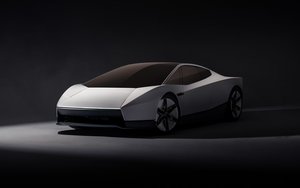
Fast Company was one of the most vociferous haters. “The Roadster showed off its ability to do
absolutely useless stuff that no car has ever done before,” the magazine wrote. “It raced upside down, clinging to a giant inverted ramp like a Hot Wheels car. It jumped over a Model 3, a
Model Y, a Cybertruck, a Tesla Semi, and a Cybercab.
“What it didn’t do was give us a price or a date anyone should believe. Musk’s latest toy is the most literal case of
vaporware in tech history: a product you can’t buy, propelled by actual vapor.”
Observers also noted that this Roadster has a 300-mile range, not the 620-mile range the company
talked about a decade ago -- and still demands the $50,000 deposit it first asked for back in 2017.
Jalopnik was not impressed, noting that “the car that all those folks
spent millions to preorder is gone — instead, there's a new second-generation Roadster, one that leans into Tesla's connection to SpaceX more than anything so boring as range. Welcome to the age
of flying cars, supposedly.”
Even some of Tesla’s bulls offered almost backhanded compliments: Reuters quotes a social media post from Gene Munster,
managing partner at Tesla investor Deepwater Asset Management: "It was an engineering flex with no commercial value beyond embarrassing traditional car makers."
Plenty of people flat-out loved
it. “Erm, did you see that? Because we did. In person. With our eyes. And we’re still having a hard time believing it,” wrote Top Gear.
“Gnarly.”
“There were hints that the Tesla Roadster might do something extraordinary, but I think what happened in Texas on Thursday evening far exceeded everyone's
expectations," said Henry Catchpole, host of Hagerty's "The Driver's Seat," who attended the event, as reported by Yahoo Finance. "How it all translates into a finished, usable, enjoyable road
car for enthusiasts remains to be seen. For now, it seems like an incredible engineering achievement.”
While there are plenty of reasons to doubt the Roadster's practicality, the
potential merger of Musk’s two companies seems more likely. And Tesla’s own website plays with the combo: “We already put Roadster in a rocket. Now we put a rocket in
Roadster.”
CBS News also addressed the merger possibility, citing Wall Street analyst Dan
Ives of Yorkville Ives, a leading Tesla bull: The new vehicle "puts the Tesla and SpaceX relationship on the table in a tangible way, with propulsion, pressure-vessel, and control hardware developed
at the rocket company sitting on a Tesla product,” he said. “In our view, that strengthens the case for the two companies operating as one engineering platform over time."