Email marketers may wonder what types of emails other brands are sending.
Here’s an answer: The top one is newsletters, judging by a roundup of usage statistics reported by
ElectroIQ.
The numbers are as follows:
- Newsletters — 81%
- Welcome — 79%
- Products —
75%
- Sales or promotions — 72%
- Events—71%
- Onboarding or
post-purchase — 62%
- Customer winback — 45%
- Blogs — 43%
- Subscriber
re-engagement — 41%
- Cart or browse abandonment — 35%
- Birthday, anniversary or other milestones — 31%
- Rating reviews, or net promoter score (NPS) — 29%
- Replenishment or subscriber service reminder — 27%
- Back in stock or waitlist
— 14%
advertisement
advertisement
One caveat:
These stats seem to mostly come from the UK, although ElectroIQ references global statistics such as the fact that 91% of brands worldwide use email.
They mostly coincide with other studies we
have seen. How do they square with your experience?
Then there’s the personalization question. Email marketers personalize messages based on these elements:
- Name,
company name, or other profile data — 80%
- Customer segment — 64%
- Past email interactions — 42%
- Location or geolocation — 40%
- Past purchases or donations — 34%
- Past interactions with products or services
— 33%
- Expressed preferences or interests — 3%
- Past website interactions — 26%
- Member or reward status, or points — 23%
- Gender, race or other — 14%
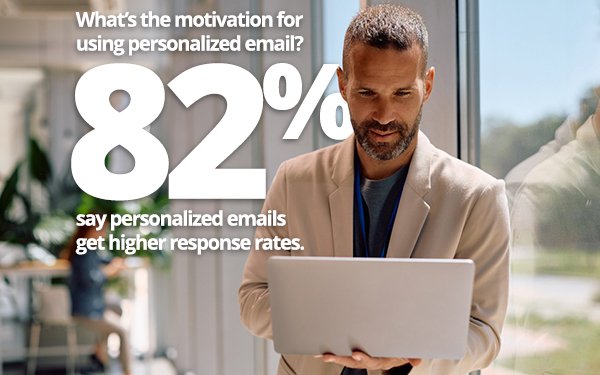
And the motivations for
sending personalized emails?
- Personalized email campaigns have a higher open rate—82%
- Personalized email enhanced click-through
rates—75%
- Personalized email increased outcome satisfaction—58%
Finally, here are the top email personalization
tactics:
- Email list segmentation — 51%
- Individualization email messaging — 50%
- Behavior-triggered emails —
45%
- Responsive email design — 34%
- Social media integration — 30%
- Individualization landing pages — 27%
- Self-managed preference center — 26%
The report concludes: “Email personalization is no
longer optional; it is one of the strongest ways to improve results.” It continues that “tailoring emails to customers’ stages, interests, and needs increased opens, clicks, and
purchases while reducing unsubscribes.”