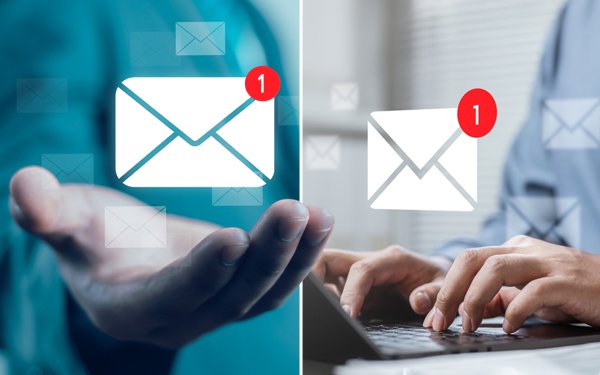
Blue checkers, which enable users to see
when a message was read, are common on WhatsApp. But email senders are in the dark, says expert Daniel Shnaider.
That is true, in part, because email world has
become “more complex in the past year,” Shnaider explains. “Apple Mail's privacy upgrades and new Gmail security protocols make it harder for traditional pixels
to do their jobs.”
In Apple’s case, the firm “fakes openings to protect users, which makes the sender think that the email has been opened even if he hasn't touched
it,” Shnaider. continues. “Google, for its part, blocks photos from unknown senders.”
So how do you get an acknowledgement anyway? Here are the five ways
that Shnaider recommends.
advertisement
advertisement
Request a read authorization. This is the classic way, although it has been updated slightly. “In Outlook it's simple (under
the Options tab), and in Gmail it's mostly available for business (Workspace) accounts,” Shnaider states. “The recipient can simply refuse to send you the
confirmation.” In any event, use this only for only formal emails, since it can be seen as intrusive, he adds.
Chrome Extensions—There are plugins like
Mailtrack or Streak that plant a transparent pixel that notifies you as soon as the email is opened, how many times, and from which device.
Link Tracking—This is
the real metric. Instead of inquiring if a person opened or clicked, use link shorteners like Bitly.
Automation tools allow users to see detailed reports, a boon for
those running a small business or working intensively. They signal “whether an email reached the inbox or ‘burned in the spam folder,'” Shnaider advises.
Manual Pixel (Advanced)—Users with some grasp of code can embed “a tiny tracking image (pixel) into the email's HTML. This tool
resembles “a digital eavesdropping device,” Shnaider asserts.
These tools sound like they would work better for sales messages than mass email marketing. Still, one
should ensure that the email has passed Google’s “selection” process to maintain domain verification and a clean sender reputation. “If your email ends up in spam, no tracking
plugin will help you,” Shnaider concludes.