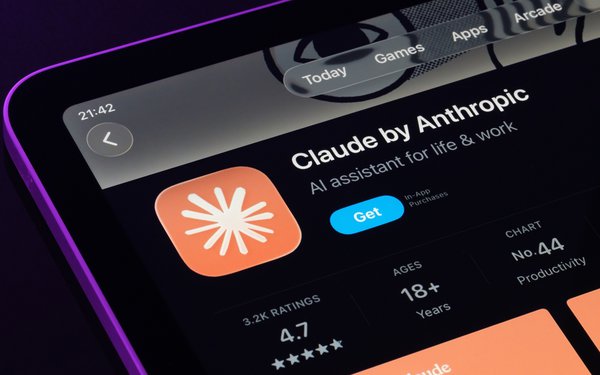
Newspapers have joined book and scientific publishers and
authors in an amicus brief supporting a copyright lawsuit filed by Concord Music Group against Anthropic in 2023.
The suit alleges that Anthropic unlawfully used
copyrighted musical works, including a large group of song lyrics, to train its AI product Claude.
The brief was filed by the News/Media
Alliance (“N/MA”), which represents news organizations, the International Association of Scientific, Technical & Medical Publishers (“STM”) and
the Authors Guild.
“The central question in this case is whether a for-profit multibillion-dollar company should be able to systematically copy
human-authored works without permission and use those works to train AI models to generate content that displaces the works so taken,” the brief states. “The answer is no.”
advertisement
advertisement
The groups “urge this Court to reject defendant Anthropic PBC’s claims of fair use under the banner of AI exceptionalism and recognize Anthropic’s exploitative behavior
for what it is: infringement on a massive scale.”
The brief continues that “Anthropic, a company currently valued at 380 billion dollars, asks this
Court to excuse as a fair use massive, commercially motivated copying of song lyrics to enable its large language model (“LLM”) Claude to generate substitutional
works—including nearly identical lyrics—a ruling that would have disastrous consequences for the music plaintiffs in this action and the songwriters whose works they invest in
and publish.”
Why should a music case like this interest news publishers?
“Even beyond the confines of this case, such a ruling could also
eviscerate a vital market for authors and publishers of books, news and magazines, scholarly articles, and other textual works who license those works to AI companies to train and operate their
LLMs,” the brief states.
The groups argue that Anthropic could just as easily form licensing arrangements with
publishers.
“Many companies in the generative AI space, including OpenAI, Microsoft, Google, Meta, Amazon, Perplexity, and Mistral, have entered into
licensing agreements with publisher members of amici to access and use the works necessary to build and operate their systems," says the brief.
But it continues, “Anthropic’s choice to wantonly scrape online and third-party sources for copyrighted works to train its Claude LLM—rather than obtain authorization and
compensate rightsholders like its peers—undermines a critical licensing market that allows publishers of textual works to invest in the creation and distribution of new works and continued
distribution of previously published works, including archival materials.”
This case "illuminates the critical, collaborative licensing markets
that are developing among copyright owners and technology companies for consumer-facing AI products, driving better, safer, and fairer outcomes for all involved,” said Danielle Coffey, NMA
president and CEO; Maria A. Pallante, AAP president and CEO; Caroline Sutton, STM CEO; and Mary Rasenberger, AG CEO, in a joint statement. “These partnerships are clearly in the public’s
interest, but they will not be fully realized if categorical fair use arguments are permitted to overtake the equities and promise of the Copyright Act.”
The case is on file with the U.S. District Court for the Northern District of California.