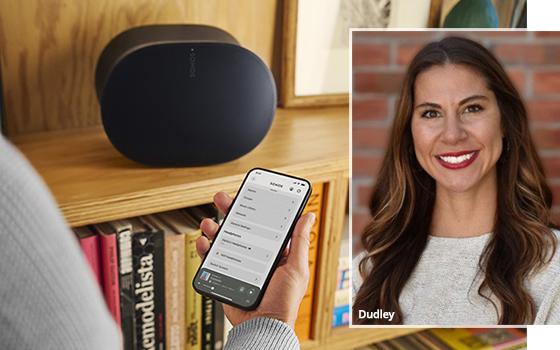
Sonos’s Senior Director of Global Lifecycle
Marketing says great onboarding isn't a marketing function, it's an enterprise one. She shares how brands can eliminate friction, anticipate needs, and turn a customer's first moments into
loyalty.
1. You spoke at our Email Insider Summit last December on reinventing onboarding for long-term
engagement. Do you have advice on how marketers can be proactive in providing a great first impression and encourage customers to reach out with any issues they have?
Think
enterprise, not channel. Onboarding isn’t just a marketing function, it’s a full customer experience function. The best programs are built on a deep understanding of customer needs across
surveys, social listening, and user research, and then activated consistently from post-sale through unboxing and beyond. We actually formalized our onboarding as a program, dubbed The First 30 Days,
which spans CRM, packaging, software, etc. We think about it through the lens of customer truths, at the end of the first 30 days of ownership customers should be able to say “I learned about my
product,” “I got help when and where I needed it,” etc, which really helps keep us grounded in what work we need to prioritize to make those true and ensure a really great initial
experience.
advertisement
advertisement
Just as important, make your “front door” incredibly easy to find and use. Customers shouldn’t have to hunt for help. The best brands go a step further,
proactively identifying friction points and showing up in the exact moments customers need support, often before they even ask. As an example, we know when you’ve received your product and
haven’t registered it, which is usually a signal that you might be experiencing a setup issue. This allows us to proactively reach out to help customers solve an issue they may be
experiencing.
2. Many customers are eager to jump right in without reading instructions. What strategies have you found most effective in nudging customers toward the right
set-up behaviors to create a seamless experience?
You have to meet customers where they are. Some will read every instruction, others will skip straight to a quick answer or ask an AI
tool. The key is designing for both behaviors. That means embedding guidance directly into the experience through in-app prompts, progressive onboarding via the channel of their choice, and contextual
tips, rather than relying on one size fits all instruction. Customers don’t understand your product like you do, you need to make it as simple for them to understand why it adds value and as
easy for them to action as possible. The most effective strategies we’ve found are real-time contextual nudges that clearly communicate the customer value. For example, we noticed many customers
were skipping True Play or other key feature enablement during set up because customers just want to get listening as fast as possible, so we have communications that trigger after they got that
initial listen to show them how True Play works and guide them directly to how to set it up. True Play also happens to be one of our most fun features to enable, think sonic laser beams.
3. Do you have advice on how marketers can structure education across instructional, support, and brand without overwhelming customers?
There should always be a clear job to be done and a clear outcome. The best experiences layer these elements naturally: clear
guidance when you’re setting up, helpful support when something goes wrong, and brand storytelling that reinforces confidence along the way. When it’s done well, it doesn’t feel like
multiple streams of communication, it feels like one cohesive, intuitive journey.
4. As customer expectations evolve, which part of the early
lifecycle do you think is most overdue for reinvention?
For a long time customer expectations have outpaced most technology and experience, until now. The biggest opportunity is in
delivering truly agentic, personalized experiences across the early lifecycle. From high-touch pre-sales to post-purchase onboarding, brands should be moving toward experiences that anticipate needs
and take action on behalf of the customer. Imagine setting up a product, hitting a snag, and instead of searching for answers yourself, the product detects the issue, identifies the fix, and resolves
it automatically. That shift, from reactive support to proactive, even autonomous experiences is where the next wave of reinvention will happen.
5. Do you
have a favorite music genre or podcast you like to listen to on Sonos speakers/headphones?
I
wasn’t an over-ear headphone person until Sonos Ace, they completely converted me, I think probably because they’re so comfortable to wear. Lately I’ve been deep into Olivia Dean (I
know I’m not alone there), so a lot of Olivia Dean radio on Spotify. I also put on Sonos Radio when I want something that feels really curated, I love the Sunset Fuzz station. For podcasts,
Good Hang with Amy Poehler genuinely makes me laugh out loud, and Lenny’s Podcast is a go-to for thoughtful conversations in tech. Also, for Sonos
soundbar owners, don’t sleep on Sonos Ace’s TV Audio Swap feature. Being able to seamlessly switch the sound from your soundbar to your headphones with the press of a button is a game
changer, especially for nighttime watching when others are trying to sleep in the house.
If you’re interested in submitting content for future editions,
please reach out to our Managing Editor, Barbie Romero at Barbie@MediaPost.com.