There's a particular kind of problem that only
the most successful brands ever face: What do you do after the biggest moment in your history?
For Mattel’s Barbie, that moment was the 2023 Greta Gerwig film — a cultural
phenomenon that generated over $1.4 billion at the box office and made the 66-year-old doll feel, briefly, like the center of the universe. Then the confetti settled. While Barbie sales came in flat
in its most recent quarter, they fell over the full year. And Mattel found itself navigating the classic post-blockbuster question: Now what?
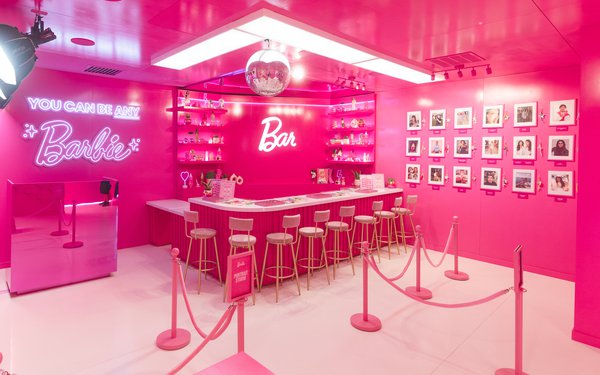
This past weekend in Indio, California, the brand
took one answer for a test drive, with Barbie's debut at Coachella — billed as a "You Can Be Any Barbie" pop-up experience.
It’s already a hit after the first weekend. Nathan
Baynard, Barbie's vice president of marketing, says more than 6,000 fans walked through the pop-up itself. A mobile beauty truck, part of a collaboration with GlamLite, drew over 8,000 engagements as
it roamed the desert. And an apparel collaboration with golf brand Fore All is also getting plenty of notice. Creator content racked up 130 million views.
advertisement
advertisement
Baynard tells Marketing
Daily Barbie was the number-one brand mentioned on social over the festival’s first weekend. “We’ve already surpassed every internal benchmark we had.”
A
Mattel vet who rejoined the Barbie brand five months ago after two years at American Girl, Baynard says the festival presence offers a unique way to win attention from adult fans. "This is a lot
about connecting with the audience, building affinity," he says. "We believe that over time, that drives ongoing loyalty that will unlock business in a meaningful way."
In other words,
Barbie is playing the long game, which increasingly has to include adults. Collector dolls already account for roughly 8% to 10% of total Barbie sales, Baynard notes — but the bigger
opportunity may be in the broader cultural halo: apparel collabs, beauty partnerships, licensing, experiences. As birth rates flatten and Gen Z loudly debates whether to have children at all, toy
companies can't simply wait for the next generation of six-year-olds to show up.
Coachella, then, isn’t really about selling dolls. But it is about reminding a generation that grew up
with Barbie — and then fell a little out of love — that she's still here, still relevant, and apparently, still pretty good at a party.