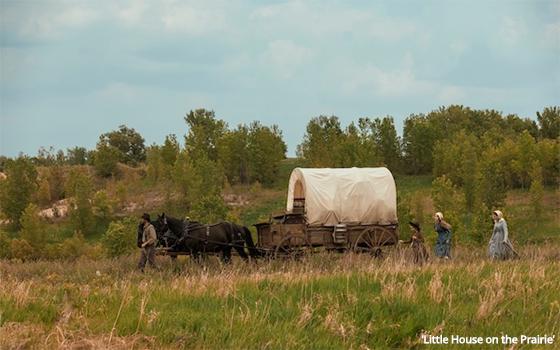
Coming out against “Little House on the
Prairie” would seem to be akin to coming out against puppies and kittens.
And yet, the TV Blog has unearthed a negative take on Netflix’s
upcoming revival of the beloved series of the 1970s and ’80s, sight unseen.
The comment came from none other than former Fox News and NBC News
personality Megyn Kelly.
Netflix first announced way back in January 2025 that it was putting a new, eight-episode
“Little House on the Prairie” series into production. It is scheduled to premiere this summer on July 9.
Within days of the announcement, Kelly, 55,
quickly voiced her opinion of the project in an overwrought post on X.
advertisement
advertisement
“@Netflix if you wokeify Little House on the
Prairie I will make it my singular mission to absolutely ruin your project,” she wrote.
The post was overwrought, and also just plain weird. It is hard to
imagine getting so worked up about a show that would not appear for another year-and-a-half, especially a show descended from such a well-remembered predecessor series and adapted from one of the most
popular novels in American literature.
But the weirdest thing of all was that Kelly would want to sentence the show to ruination if she didn’t like it.
The threat is ludicrous, as if Megyn Kelly has the power to “ruin” TV shows.
It is amazing how these things take on a life of their own. Soon
after Kelly’s post, Melissa Gilbert, 61 -- the former child star of the original “Little House” series -- felt the need to respond, although she has absolutely nothing to do with the
new series.
On “The View” in February 2025, Gilbert said she “supports” the new series and surmised that Kelly likely never watched
the original “Little House” series.
This trivial tit for tat was covered everywhere, including USA Today, Variety, People,
HuffPost and The Hill -- and the list goes on and on.
Here is a bit of irony: The
stories in Laura Ingalls Wilder’s Little House on the Prairie series of novels took place on the Kansas frontier in 1869, and she wrote them in the 1930s.
Every era in American history has its problems, but in 1869 and later in the 1930s, social media was not one of them.