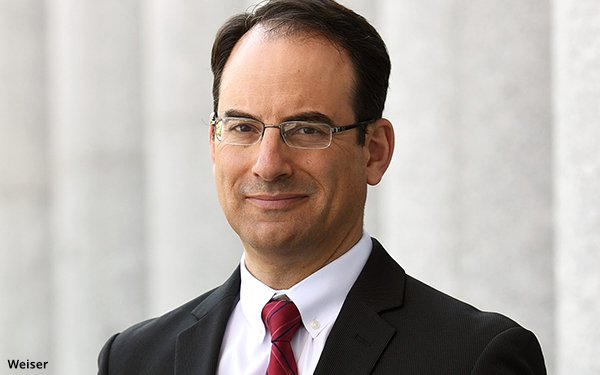
Colorado Attorney General Philip Weiser on
Monday urged a federal appeals court to lift a block on a law mandating cigarette-style warning labels for social media.
The statute "fits comfortably within the longstanding
tradition of government measures designed to ensure that commercial speech is accurate, and that consumers receive complete and reliable information in the marketplace," Weiser's office argues in a
brief filed with the 10th Circuit Court of Appeals.
The Healthier Social Media Use by Youth Act, which had been slated to take effect in January, requires social platforms to
either provide minors with information about social media engagement that helps them "understand the impact of social media on the developing brain and the mental and physical health of youth users,"
or send pop-up warnings every 30 minutes to minors who use the platforms for more than one hour a day (or between 10 p.m. and 6 a.m.).
advertisement
advertisement
The industry group NetChoice -- which
counts large tech companies including Google, Meta and Snap as members -- challenged the law, arguing it violates the First Amendment by compelling platforms to spread the state's view that social
media is harmful.
U.S. District Court Judge William Martinez in Denver sided with NetChoice and issued a preliminary injunction prohibiting enforcement.
"The Court fully appreciates Colorado’s legitimate effort to protect the children and adolescents of our state from the impacts of social media use on their health and
wellbeing," Martinez wrote. "The Court concludes, however, that it is
substantially likely NetChoice will succeed on the merits of its claims that Colorado may not pursue this laudable goal by compelling social media companies to speak its expressive messages."
Weiser is now appealing that injunction.
"Colorado enacted the Healthier Social Media Use by Youth Act in response to the growing consensus that excessive
social media use can harm the mental and physical health of young people," the state argues.
"The law requires covered social media companies to provide young users with
factual, research backed information about the health risks of excessive social media use," the attorney general writes, adding that the law is similar to measures mandating health and safety
disclosures for tobacco, alcohol, hazardous products and other goods.
Former Surgeon General Dr. Vivek H. Murthy said in a 2023 report that social media "may have benefits for some children and adolescents," but could also pose
"a profound risk of harm to the mental health and well-being of children and adolescents."
NetChoice is expected to file a response with the 10th Circuit next month.
The organization previously argued to Martinez that there is "intense scholarly and social debate" about social media's impact on teens.
Colorado isn't the only
state to pass legislation requiring social media warnings; California, Minnesota and New York have enacted similar laws.
Last month, NetChoice sued in Minnesota to block that
state's statute. That matter is currently pending in front of U.S. District Court Judge Nancy Brasel.