Last week in Manhattan, I attended a free
Rooftop Films screening of the new movie “Tuner,” a thriller/romance in which the main character, Leo Woodall, has hyperacusis, a condition that makes sufferers super-sensitive to any
sound. Woodall spends the movie --- or most of it, anyway -- wearing either earplugs or headphones to block off noise. In a nice twist, my fellow audience members and I also heard the entire film
through specially supplied headphones.
I only mention this because you hardly need hyperacusis to have lesser degrees of sound sensitivity -- like when attending loud concerts. Or when you
want to sleep.
Which brings me to a company called Hears and its new Sleep earplugs.
This product, said to block off common sleep disruptors like traffic or a partner’s snoring
while providing comfort even for side sleepers, is the first-of-a-kind for a two-year-old brand that has already established itself as a leader in the concert-attending side of sound filtering.
advertisement
advertisement
The Sleep product, in fact, brings Hears’ 20-something co-founders Bob Verlaat and Nick Nijhof full circle, since they had earlier founded Dore & Rose, a brand dedicated to sleep wellness
that features such products as pillowcases, sleep masks and PJs.
There’s now likely to be some crossover between the two companies, the two founders told me during a recent talk.
The Sleep earplugs, said Nijhof, provide a “complete sound-blocking experience” also usable on airplanes. The earplugs are “super comfortable and also stay in while you
sleep.” The biggest problems with competitors’ products, he said, is plugs “falling out” or “hurting after a few house, so people take them out.”
Dore &
Rose, itself only four years old, now has about $30 million in annual revenue and Hears already has some $7.5 million.
The latter’s growth has been largely fueled by co-branded sound
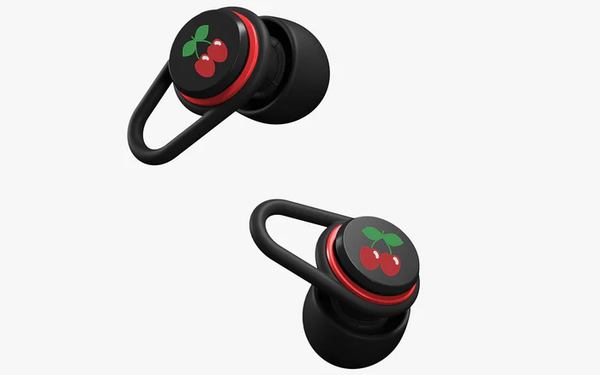
filtering earplugs with two entities: fashion retailer YSL and Spain’s entertainment giant (and retailer) Pacha Ibiza.
Verlatt said those partnerships were possible because the shape of
Hears’ earplugs allowed the brands to place their logos right on the products.
Besides the tie-ins, Verlatt credited Hears success to two other factors: an appealing aesthetic that
“people would wear proudly in their ears” and “a filter technology that keeps sound clear without losing the experience of live music.”
Verlaat, a passionate partygoer
and music festival attendee, was driven to co-found Hears after coming down with tinnitus, or a constant ringing in his ears.
“The number of younger people getting hearing loss and
tinnitus is rising because we’re partying more and being exposed to loud environments more,” he explained. “During the last few years, people have come to realize how damaging the
sound at music events actually is. We see younger people more often protecting their ears.”
As for older people, Verlaat said, they’re starting to understand that “their
hearing problems are not necessarily coming from getting older, but simply because they’ve been exposed to loud sound so often.”
Hearing loss in general is “quite an
underestimated problem,” he stated.
On the marketing side, Verlaat said that Hears has done paid ads on Meta, but largely credits the YSL and Pacha Ibiza collaborations with getting the
brand “a lot of attention and credibility.”
The co-branded earplugs are sold by YSL and Pacha Ibiaza as well as by Hears. While a couple of other brick-and-mortar retailers, and
now Amazon, also sell Hears products, Verlaat and Nijhof said that 95% of sales still come through the brand’s own website.