While a number of Cannes Lions presentations today addressed the unsavory
topic of media addiction -- particularly among young, impressionable minds -- Dentsu demonstrated how it can be used in a good way. Instead of exploiting a KPI like TTTS (the social platform's cynical
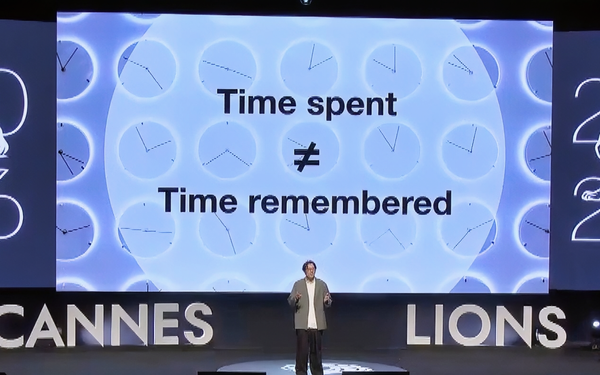
"total teen time spent" -- Dentsu Creative Producer Jiro Murayama showed what happens when you make total time spent a scarce, perishable and precious commodity.
Specifically, he
presented a use case for the digital app version of the Pokemon trading card game that restricts the time its users can open it and win a free trading card to one-minute intervals, twice a day.
"Twice a day, morning and night, you open the free pack of cards," he explained, adding, "In that minute something happens: anticipation and the thrill of getting the card. In this cycle, we try to
make people want to come back again.
advertisement
advertisement
"What begins a a small moment grows into something much bigger," he continued, "Because when you design time well, even one minute becomes something people
want to return to."
Dentsu's creative code may seem antithetical in an industry premised on hijacking as much of people's time and attention as possible, but it's more of a less is more
strategy recognizing the value of time spent well.
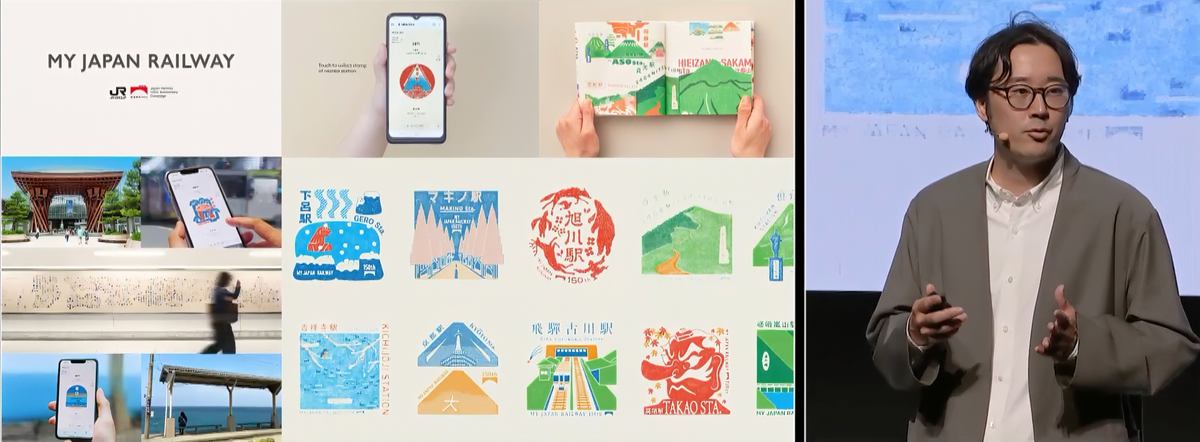
In fact, Murayama gave another example of what otherwise seem like frustrating idle time -- the time Japanese commuters have to spend at
local train stations when trains stop to drop off and pick up passengers -- into something that actually has collector value.
The project, created in conjunction with Japan's national railroad
system, created collectable stamps for each of Japan's more than 1,000 railway stops to give new meaning to time spent at each station.
"We turned idle commuting time into a stamp collection
challenge," he explained, adding that Japan's creative code "is not about what to create. It is about how we enrich the moment."