It’s been a busy couple of
weeks for developments in monitoring blood pressure, a harbinger of such conditions as heart disease and stroke.
On July 16, Vital Signals announced the Signal Ring, described as the
world’s “first wearable designed to measure and understand blood pressure without the squeeze, noise or setup of a traditional cuff.” Working 24/7, the ring will start shipping
in October, but is available for online pre-ordering at $399.
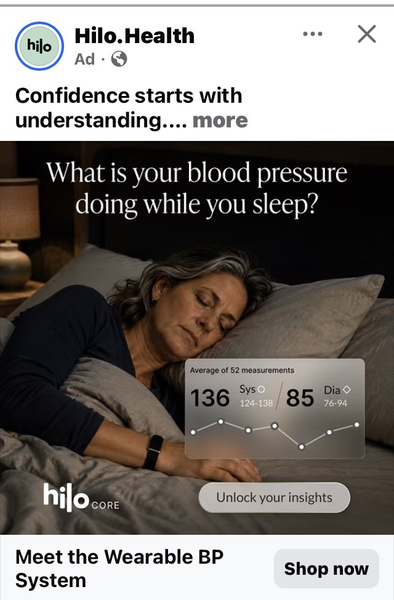
Then, on July 21, Aktiaa brought Hilo Core to the U.S. Falling somewhere between a wearable and a traditional blood pressure
monitor -- and already used by more than 200,000 people in Europe, Canada and Australia -- Hilo includes both a wrist band for continuous monitoring and a cuff for "gold standard" periodic
measurement. It’s available now at us.hilo.com and Amazon for $89.99, plus a $149.99 annual subscription.
advertisement
advertisement
Both the Signal Ring and Hilo
Core are designed to provide users with long-term blood pressure insights.
Pharma & Health Insider interviewedHilo CEO Stefan
Petzinger via email.
This Q&A has been edited for space and clarity.
Pharma & Health Insider: What audience are you targeting for Hilo?
Stefan
Petzinger: Our vision is a world where no lives are lost or damaged by the effects of high blood pressure. So we're focused on people who want to better understand their blood pressure, whether
they've been advised by their doctor to keep an eye on it, or they've already been diagnosed with hypertension.
The opportunity is huge. Nearly 30% of U.S. adults have high blood pressure, and
more than 80% are concerned about their long-term cardiovascular health.
We also see healthcare professionals as a key audience because they play such an important role in helping people
engage with their cardiovascular health. Helping people better understand their blood pressure is something we believe is best achieved together.
We work closely with medical advisors, we've
recently appointed a chief medical officer, and we collaborate with clinicians and researchers across a range of studies and initiatives.
P&HI: How will you market Hilo?
Petzinger: We'll be using a mix of channels in a broad, integrated campaign. You'll see us across earned media, paid media, social, influencers, partnerships and digital channels. We want to
meet people wherever they're already looking for trusted health information and start a conversation about blood pressure awareness.
High blood pressure affects hundreds of millions of people
globally, yet awareness remains surprisingly low. A big part of our job is simply getting more people talking about it.
P&HI: What is your main messaging?
Petzinger:
Our message is simple: blood pressure is too important to be understood through the occasional reading.
People can track almost every aspect of their health today, but blood pressure is still
largely understood through the occasional snapshot. We think there's a much better way.
Hilo helps people see how their blood pressure changes over time and gives it the context it's been
missing. The goal isn't more data for the sake of it. It's helping people better understand one of the most important indicators of long-term health.
P&HI: Did you need any FDA
approvals before U.S. launch?
Petzinger: It wasn't a prerequisite. We chose to launch with an FDA-cleared cuff because credibility matters.
Having an FDA-cleared cuff
as part of the Hilo system was an important milestone: It gives people confidence in the foundation of the experience, while we continue investing in bringing the same level of validation to the Hilo
Band in the future.
P&HI: Is Hilo Core considered a medical device?
Petzinger: In Europe, both the Hilo Cuff and Hilo Band are certified as medical devices. In
the U.S., the Hilo Cuff is FDA-cleared as a medical device, while the Hilo Band is currently marketed as a wellness product and has not yet received FDA clearance.
P&HI: Why does Hilo
still use a cuff?
Petzinger: The reality is that, today, cuff calibration is still essential for accurate blood pressure measurement across different phenotypes. The cuff remains
the gold standard, and we think people deserve that level of trust and confidence.
What Hilo does is build on that foundation. We combine trusted cuff calibration with a wearable and
digital experience that helps people understand how their blood pressure changes over time. That's how we move beyond the occasional snapshot and give people a much better understanding of one of the
most important indicators of their long-term health.