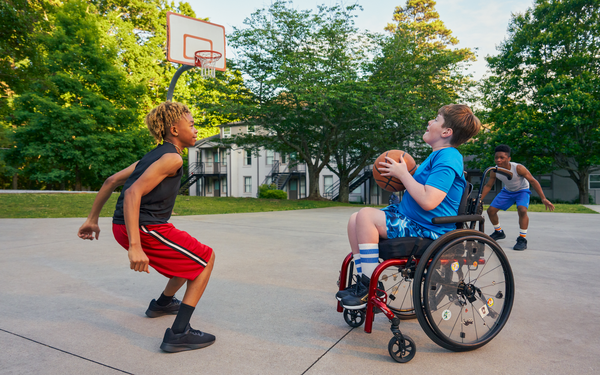
Disability-centered LaVant Consulting has teamed with production
agency Where the Buffalo Roam (WTBR) to launch All in Frame, a collection of free stock photos designed “to help marketers, advertisers and creative
teams tell more authentic stories about disability.”
Pharma & Health Insider spoke with Andraéa LaVant, LaVant Consulting’s CEO, and Nilou Safinya, WTBR’s
executive producer and creative director.
This Q&A has been edited for length and clarity.
Pharma & Health Insider: Why the need for All in Frame?
Andraéa LaVant: One of the things we’ve consistently encountered is the lack of strong representation when it comes to disability. There was very little to choose from. Imagery
said to represent us oftentimes was not even of disabled people.
advertisement
advertisement
For example, when building a website seven or eight years ago, I was working with a graphic designer who wanted me to pick
images from a stock collection. And there's this guy in a wheelchair in picture 32, but then when you got to picture 35, he's standing on a ladder.
P&HI: Who do you see as All in
Frame’s primary users?
LaVant: Marketers, agencies, other organizations. Folks with good intentions often don't even know that what they are sharing with the world is
not representative. With our team being disabled folks, it created a disconnect -- because we're able to tell when the representation is off.
P&HI: Is the healthcare industry part of
your target audience?
LaVant: Definitely. That's why we have scenes specifically in healthcare offices. What is
so powerful is it's not just a disabled person as a recipient of care, but the care provider has a visible disability as well.
When we talk about representation, we're not just talking about a
wheelchair user. We're saying that we are also in positions of power and influence -- whether that's a dad reading a bedtime story to a child, an executive leading a meeting, or a doctor in an
office.
P&HI: Your photos include alt-text descriptions. Why is that important?
LaVant: Alt text is
essentially providing the words specifically for blind or low-visioned people who use screen readers. It tells you what's there in vivid and accurate detail. A lot of times, if alt text is even
included with an image, it uses a word not descriptive at all of what's happening. For us, it was really important for folks to be able to identify themselves without having assumptions made
about them, and also to ensure accuracy and demonstrate diversity through the words in addition to the images.
P&HI: Are you
providing All in Frame as a public service?
Safinya: It is completely free. Others have done similar things -- for example, Getty has a pretty extensive library, but it is quite
expensive. which often creates a deterrent to use it.
LaVant: When I was building that website I mentioned, I went to the Getty collection, which I knew had been intentional about
disability, but, as a new entrepreneur, I would have to pay $400 for a single photo. When we talk about accessibility, we're not just meeting it from a technical standpoint, but also from
affordability -- because access also connects specifically to those who represent marginalized communities.
P&HI: What’s the
response been in the site’s early days?
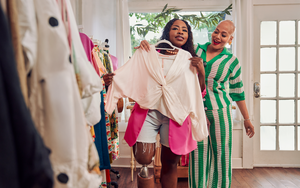
Safinya: Lots of people are sharing how much they feel this is needed. It's also nice to see the folks who actually participated in the
photo shoot talking about their experience. Something really important to us was that the shoot wasn't just about the end product, but all the creative development and production was done in a way
that was incredibly inclusive and thoughtful as well as accessible.
What we're now hoping is to be able to get more exposure outside of our immediate community circles, to get more people in
the industry to see and start using the collection.
We're soon going to drop another series of photos about the same volume as in the first shot [138 images] and then our plan is to
create a toolkit that can be used by other creators, industry professionals and production companies to do this sort of work themselves so that we continue to build the library. The hope is that
people will use this toolkit to do these same sort of considerate, accessible, inclusive shoots and submit their own photos to be included in the collection.
P&HI: Besides press
coverage, how are you getting word out about All In Frame?
LaVant: Various social media platforms, including Instagram and LinkedIn. WTBR, in addition to the website itself,
created eight beautiful behind-the-scenes videos and interviews. Those are grabbing people, explaining the why, and getting a lot of shares and comments. We created a deck for each of the folks
that were part of the photo shoots to share as well. So it's not just coming from our platform, but the models and even the cast also have language and images and videos to share.
P&HI: What would you want marketing and agency executives to take away from this Q&A on why they should use All in Frame?
Safinya: The hope is that this is just the
beginning, and that folks will use the library, then want to also contribute to the library, and beyond that, take the learnings forward into their content development -- so that in all of their
shoots and the content they create, they will have more of an eye toward inclusivity and accessibility and authentic representation.