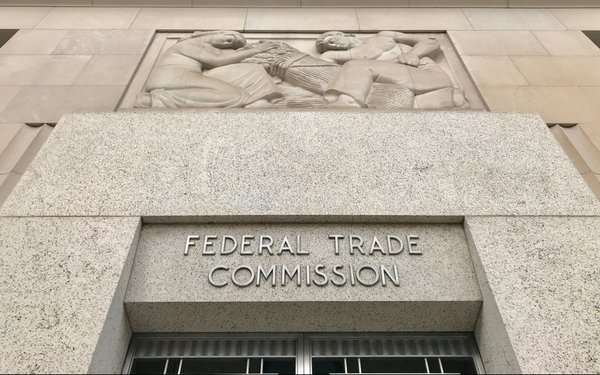
The Federal Trade Commission is pushing an
appellate court to revive a lawsuit claiming that Meta Platforms violated antitrust law by monopolizing a market for "personal social networking services."
U.S. District Court
Judge James Boasberg in Washington, D.C. dismissed the FTC's case last year after trial, ruling that Meta is not a monopoly because it currently competes with YouTube and TikTok.
The FTC argues in papers filed last week with the D.C. Circuit Court of Appeals that Boasberg's analysis is "irredeemably flawed."
The commission specifically
contends that Meta operates two markets -- the "personal social networking services" market as well as the "market for unconnected content, such as the short-form videos on TikTok and YouTube."
The FTC adds that Meta has monopoly power in the "personal social networking services" market -- which means sites or apps where people connect with friends or family members.
advertisement
advertisement
"The number of friends-and-family posts remains enormous; Meta trumpets this as the key reason to sign up; and Meta’s apps have virtually no Reels-only users," the FTC
writes.
The filing comes in a battle that began in December 2020, when the FTC claimed that Meta's acquisition of Instagram (purchased for $1 billion in
2012) and WhatsApp (bought for $19 billion in 2014) enabled the company to maintain a monopoly.
Boasberg said in his dismissal order that the social media landscape "changed
markedly" since the FTC filed suit, noting TikTok's emergence as a rival.
He added that his prior written rulings in the matter -- issued in 2021, 2022 and 2024 -- "did not even mention the
word" TikTok, but that today "that app holds center stage as Meta’s fiercest rival."
The FTC is now appealing that ruling to the D.C. Circuit. The agency argued in an
earlier round of papers that the key question is whether Meta held a monopoly when the case was filed, not when it was decided.
Meta urged the appellate court to uphold
Boasberg's dismissal order. The company contended in an August filing that the trial evidence showed people treat TikTok and YouTube as "substitutes" for Facebook and Instagram.
"By any accounting, content posted by friends has become a small fraction of the content that users see on Facebook and Instagram -- less than 15% of posts in Facebook’s news
feed and 5% on Instagram’s feed," Meta argued, adding that "Reels" videos are now the most popular feature on Facebook and Instagram.
But the FTC says it disagrees that
short-form video services substitute for social networking with friends.
"There is indisputable consumer demand to connect with friends and family all in one place -- which
Meta’s apps offer but TikTok and YouTube do not," the agency writes.
The FTC also restates its argument that it only needed to prove Meta held a monopoly in 2020, and
that whether it still held a monopoly in 2025 shouldn't have factored into whether the company violated antitrust law.
The FTC Act, which authorizes the agency to seek court
orders against antitrust violators, "says nothing about the time of decision," the agency writes. "Instead, it provides that the Commission 'may bring suit' if it 'has reason to believe' that the
defendant 'is violating, or is about to violate' the law."
The appellate court has not yet scheduled a date for oral arguments.