If you are working on 2027
marketing budgets, do not ignore the cost to safeguard them. It's sad that we must assign dollars to policing ad budgets from less-than-honest operators all across the advertising food chain. Yet it's
very necessary, as we know, not only because we won’t see the vast majority of what we place, but also because, even before anything is placed anywhere, budgets are bleeding.
A long time
ago, in a galaxy far, far away, you would buy a newspaper or magazine ad, and then the publisher would send you a copy of the publication as proof that your ad ran as promised. When radio and TV came
along, with local and regional stations strung together into national or wider regional networks, proof came in two forms. If you bought an ad in the listening/viewing area, you would know when the ad
was scheduled to run, and you would gather family and friends around the radio or TV to enjoy the ad live, as it ran. Or you could get a tape with the ad in its natural habitat for you to review.
advertisement
advertisement
When the fragmentation and proliferation of TV stations became too large to manage via tapes, Karl Eller, who had built his media empire from Phoenix, Arizona, realized that advertisers were
spending billions of dollars, blindly trusting that networks were airing their commercials exactly as scheduled. Seeing the massive hole in the market, Eller invested heavily in Broadcast Data Systems
(BDS).
BDS utilized a pioneering, military-derived pattern-recognition technology (an early form of digital fingerprinting). Instead of relying on a human to watch the screen, automated
monitors were set up across major US media markets. These monitors listened to and watched live broadcast feeds 24/7, matching them instantly against a database of encoded digital signatures from
known advertisers.
Eller used his influence across the media landscape to establish it as the definitive, automated data standard for proof-of-performance tracking. Under his guidance, the
automated pattern-recognition tracking system became so powerful that it expanded from verifying TV/radio advertisements to tracking actual radio music airplay, ultimately providing the data that
powered the Billboard music charts.
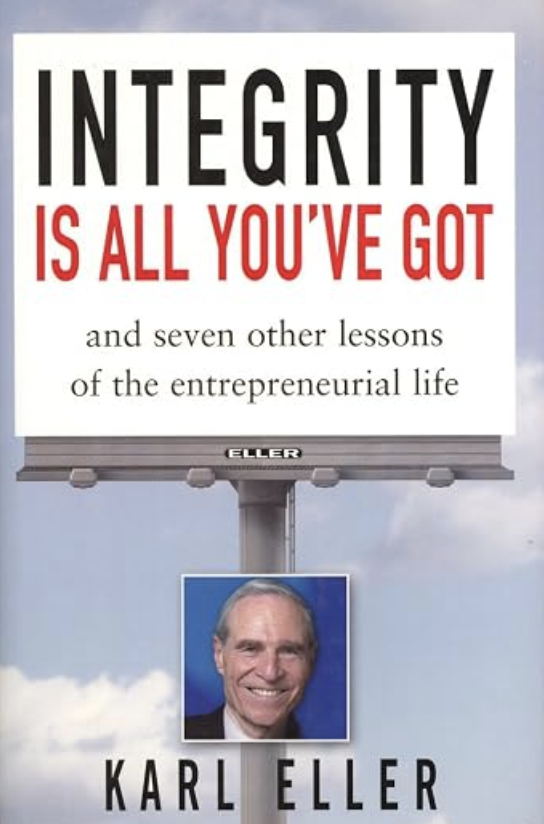
(Side note: if you want to learn more about Eller’s remarkable life, I highly recommend reading his memoir, "Integrity Is All You've Got: And
Seven Other Lessons of the Entrepreneurial Life.” The title alone is so relevant today).
In today’s budget allocation, you are spending money on various ad verification tools and
budget safeguards. You might employ the services of media auditors and agency scope auditors. You might use IAS or Double Verify. You may choose to buy delivery data independently from your agency to
evaluate what your agency or platforms are telling you they placed. You get data pulls from the platforms themselves, all reporting what they did with your ad dollars within their own walled garden.
The result is a hodgepodge of fractured data, semi-proof points, half-truths and marginally relevant insights into whether what you bought was placed, and, hopefully, delivered something approximating
the intended audience.
Marketers worry a lot about working versus non-working budgets. I have argued that this qualification is no longer relevant in today’s world. The dollars invested
in verification and safeguards are working dollars, even if they are spent on things that never reach your target audience. That's because not spending this money surely means the reach of your target
audience will be smaller.
It is so true: integrity IS all you’ve got. Having it come at a cost is the wrong way around.