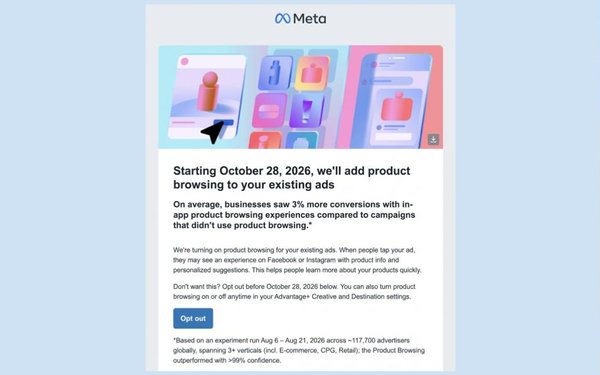
Meta Platforms' aggressive move appears to
mark a shift in strategy as the company changes "product browsing" from an opt-in to an opt-out feature at the end of this month.
Rather than send users to the advertiser's website when they
click on the ad, Meta will open a personalized, in-app browsing page hosted on Facebook or Instagram.
The feature has been available as an optional manual setting, but advertisers have an
option to opt out by Oct. 28.
After this date, the setting will turn on by default, according to one report that points to a headline in a notice sent to advertisers that reads the plan will
add "product browsing to your existing ads."
Advertisers can turn product browsing on or off at any time in Advantage+ Creative and Destination settings.
Meta said its testing of
117,000 advertisers for a two-week period in August yielded an average 3% increase in conversions, but also introduces an extra click between the user seeing the ad and landing on the actual
website.
advertisement
advertisement
When a user clicks a Meta ad, the journey is usually direct -- which means the user taps on the ad and lands on the brand's website or specific product page to browse or purchase the
product.
Google, Microsoft and Meta and other technology companies for years attempted to remove extra steps in their ad platforms. Now Meta is adding one.
It is difficult
to understand why unless the plan adds a purchase on Facebook or Instagram at the end of the process.
When Product Browsing is enabled, an extra step is added because the user taps on the ad
and rather than it taking the consumer to the website, it navigates to a full-screen Meta catalog page on Facebook or Instagram.
While this page displays a scrollable row of the brand's
product images, pricing, and descriptions pulled by Meta's AI, it still inserts an extra click.
This would be an extra step -- unless Meta plans to initiate the ability for Facebook or
Instagram to complete the transaction for consumers and brands.
Today, external ecommerce websites manage the entire checkout process since Meta discontinued its in-app checkout
sometime between June and September 2025.
Payment gateways like Shopify Payments, Stripe, PayPal, or Authorize.net handles the transaction today, and the merchant collects and own the
customer's email, shipping address, and billing details. Order fulfillment also is done by companies such as Shopify, WooCommerce, or Wix. The company or brand manages post-purchase inquiries,
refunds, exchanges, and order updates.
While Facebook and Instagram no longer process payments, handle customer credit cards, or manage order transactions, and through I have no confirmation
from Meta, I get the sense the company is working to make that change where merchants will have an option to push the payment through the platform.