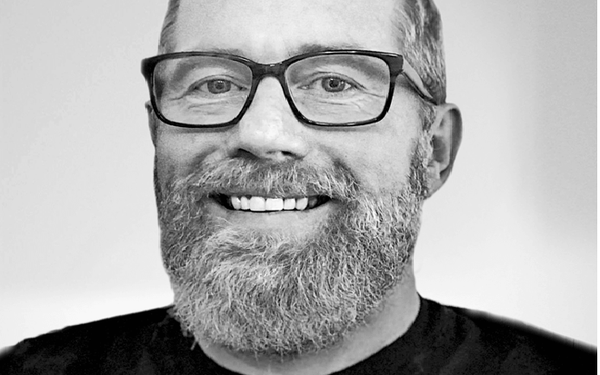
John Trahar, founder of agency Greatest Common Factory, has died of
complications from bacterial meningitis caused by listeria. He was 58.
Trahar created GCF in 2011 to introduce a streamlined approach to brand strategy and storytelling. After two decades at big
agencies, most notably as vice president-managing group creative director at GSD&M, he believed he had experienced the limitations of larger agency structures.
advertisement
advertisement
Trahar’s work and
industry voice (he was a prolific commenter on advertising for numerous trade and business publications) challenged conventions particularly in how advertising is commissioned,
made, understood, and valued.
He was among the first agency leaders to replace advertising’s traditional hourly-rate business model with a flat fee for
projects. He reasoned that “agencies shouldn’t be penalized for getting the right answer fast and clients shouldn’t be penalized if it takes longer.”
In content, he
replaced the creative hierarchy with a “Delta Force” team approach where “people who are five people, not people who need five people” work together to create
disruptive storytelling faster and smoother than traditional teams. For this reason, he removed the account service position and made it central to every GCF employee’s
role.
He is credited with helping to lead the turnaround of high-risk auto insurer SafeAuto (now part of Allstate) with a
long-running, two-phase campaign called “Fârnhäan.” The campaign featured a faux-German accented AI device that confidently gave absurdly wrong answers to
questions, designed to contrast with the simplicity of getting a car insurance quote from SafeAuto.
And he brought MMA and UFC to Nike with its highest-watched
video ever and launched the “Jordan Brand Breakfast Club” campaign that reinvigorated Nike’s Jordan brand – employing quick-turn video shoots to tell
deeper behind-the-scenes stories with athletes.
As a longtime creative officer at GSD&M, he won awards for his work with Land Rover and Southwest, and led the agency team introducing
the new AT&T. He was also credited with helping to turn around the Marshalls franchise.
As an industry voice, he was often provocative, for example, prioritizing value over size,
measuring lifetime brand value rather than customer value, and rethinking work around solutions rather than effort. He was also one of the early voices on how AI is critical to creative
survival.
“To John, GCF wasn’t just a business, it was a statement. He made it a beacon for clarity, simplicity, and power
in advertising,” said Melisa Smith, CFO at Greatest Common Factory. “His influence continues to shape the agency today, which has been able to thrive, evolve, and expand on the foundation
he built—proof of how strongly he engineered us to stand for something enduring, even in his absence.”
Trahar started his career as an art director at Ogilvy New York, after
attending Roanoke College and Miami Ad School, and at GCF became known for compelling copy as well. He served as board president for Art from the Streets, which helps homeless artists gain recognition
for their work.