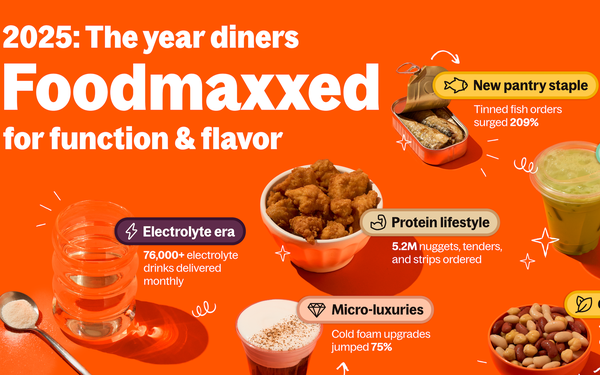
In its recent “2025 Delivered
Report,” its annual look at trends in users’ ordering data, food delivery platform Grubhub dubbed 2025 the year that “America entered its foodmaxxing era.”
The report,
based on data from the beginning of the year through Oct. 15, defined "foodmaxxing" as “a cultural shift where meals, snacks, drinks, and grocery orders were designed for maximum nutritional
value, functional payoff, and yes, a little extra aesthetic appeal for their social feeds.”
To support the designation, the report pointed to ordering trends like a 135% increase in
grocery bean orders, and purchases of tinned fish jumping 209%. Both seemed to relate to the supporting trend of consumers' increased focus on protein, with protein-labeled grocery items increasing
20% on the year – including some unexpected dessert and snack categories.
advertisement
advertisement
The brand also positioned “micro-luxuries” as part of the trend, including ordering cold foam
on top of coffees.
Marketing Daily caught up with Grubhub Director, Brand Marketing Christopher Krautler to discuss insights from the report.
This interview has been edited
for length and clarity.
Marketing Daily: How did you decide on the focus of the report?
Christopher Krautler: Food is so pervasive throughout all aspects of culture,
so it certainly can be difficult to choose the most interesting of the bunch. But for us, it's less about what trends we think are interesting. Instead we focus on trends that are part of the cultural
zeitgeist and illustrative of broader societal trends. The “foodmaxxing” movement and the trends that support it were the clear standouts from 2025, and we left nothing on the table.
Marketing Daily: What are some of the factors that may be contributing to the “foodmaxxing” trend?
Krautler: “Foodmaxxing” is really about
intentionality. Diners want every food choice to count toward something, whether that’s hitting wellness goals, fueling performance, or just making everyday moments feel more special. People are
making deliberate choices about what fuels their bodies.
Social media has fed into this, creating a culture of optimization where consumers proudly share their wellness routines and functional
food choices. And when we’re delivering over 1.5 tons of beans and watching tinned fish orders triple, it’s pretty clear this isn’t just a Grubhub trend, it’s a broader shift
in how people think about food.
Marketing Daily: What are some insights in the report that are important takeaways for marketers?
Krautler: A big takeaway is that
consumers expect more from their food and beverages. Taste is still king, but now it needs to bring something extra: energy, protein, gut health support, or even just a little aesthetic boost. The
items that win are the ones that hit both sides, functional and taste.
Diners are also looking for upgrades in unexpected places, whether it’ protein showing up in everything or cold
foam turning into the ultimate coffee upgrade.
These insights give marketers a real chance to rethink categories and show how familiar items can meet today’s expectations. The nearly 20%
increase in protein-labeled items, including such unexpected items as cookies, popcorn, and cinnamon rolls, shows consumers want functional benefits without sacrificing pleasure.
Marketing
Daily: How does Grubhub use the kind of data shared in the report to influence its consumer engagement and marketing strategies?
Krautler: The “Delivered Report” is a
yearly look at what people are ordering, but we’re reviewing this kind of data all the time. It helps understand what diners are gravitating toward, what they repeat, and where their needs are
shifting. That shapes a lot of what we do, from the kinds of offers we run to how we show up on the platform, and even which categories we help bring forward.