At CES this week, the Lego Group debuted what it
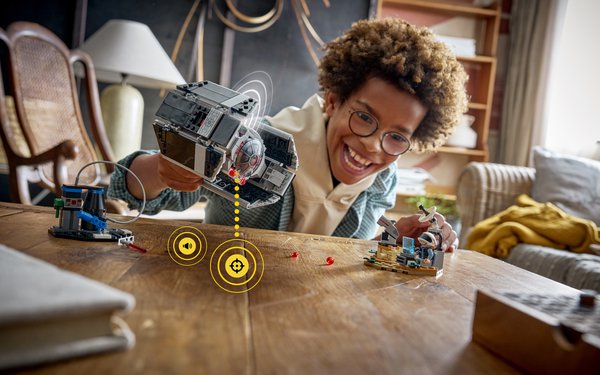
calls one of the most significant changes to its core play system in decades: Lego Smart Play, a new platform that uses sensors, sound and light to make physical Lego builds respond in real time
— without screens or apps.
The technology, which will debut March 1 with three Lego "Star Wars" sets, is designed to bring feedback and storytelling directly into brick-based play. An
X-wing can emit engine sounds when lifted. Lightsabers hum when minifigures clash. Emperor Palpatine’s throne plays “The Imperial March.” All of this is powered by a new Lego Smart
Brick, a custom chip smaller than a standard Lego stud and packed with sensors, accelerometers, a miniature speaker and wireless charging.
Lego framed the move as a deliberate attempt to
modernize play without surrendering to screens, a line the company has defended aggressively as smartphones and tablets reshape childhood.
advertisement
advertisement
“For over 90 years, the Lego Group has
sparked imagination and creativity in children around the globe. As the world evolves, so do we— innovating to meet the play needs of each new generation,” said Julia Goldin, chief product
and marketing officer, in the announcement. “Lego Smart Play is the next exciting chapter.”
The first Smart Play sets arrive through one of Lego’s most powerful partnerships:
"Star Wars." Joining Lego executives at CES were leaders from The Walt Disney Company and Lucasfilm, underscoring how central licensed storytelling is to the launch.
For marketers, the move
reinforces why Lego remains such a revered brand, blending nostalgia and a carefully guarded sense of purpose around creativity and child development, even as it pushes deeper into advanced
technology.
Still, not everyone is convinced the balance holds.
Child advocacy group Fairplay issued a sharply worded statement calling Smart Bricks “completely
unnecessary” and arguing that Lego is “taking play out of the hands of children and putting it into the tiny sensors of these so-called ‘smart’ devices.”
“The best toys are 90% child, 10% toy,” Fairplay executive director Josh Golin wrote, warning that smart features risk displacing imagination, emotional development and open-ended
creativity — and placing Lego within a broader, more controversial trend toward AI-enabled toys.
In its CES presentation and product materials, Lego positions Smart Play as responsive
rather than directive, using tech meant to enhance open-ended building, not replace it.
Whether parents agree may determine how far this next chapter of Lego’s system-in-play can go.