On Dec. 22, one day after the winter solstice, when the
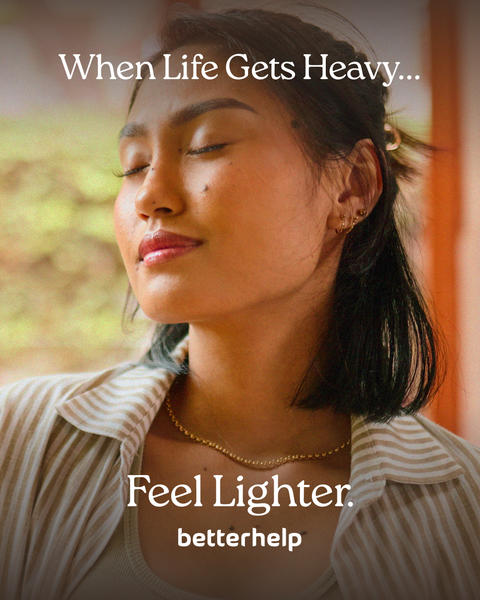
countdown to longer, lighter days began, online therapy platform BetterHelp began telling consumers to “feel lighter” themselves.
In what the brand calls its “first truly
global campaign,” which continues through this quarter, a TV spot without dialog begins with a woman entering a fairly dark apartment.
As the commercial progresses, she opens BetterHelp on her phone, and the scene gradually gets lighter. “Feel lighter. Discover the power of therapy with BetterHelp,” advises the onscreen
graphics.
The woman represents BetterHelp’s primary target demo of 18- to 45-year-old females, Chief Growth Officer Sara Brooks tells Marketing Daily. But the campaign
is also targeting a broad range of others, including allpotential members, health plans and therapists.
advertisement
advertisement
The spot has been running in the U.S. and Canada on linear TV (including
A&E, Bravo, BET, CBS, ABC, NBC, CNN, Fox News, Lifetime), streaming services (Hulu, Peacock, Paramount+, Tubi, HBO Max, AMC+, Pluto ) and paid social (Meta, TikTok, Reddit, Pinterest,
YouTube).
January marks the start of a new year, when “self-help and awareness are top of mind,” but by now in mid-January, “resolutions may be broken. And that’s the
impetus for the campaign,” says Brooks.
“No dialogue” in the spot “really allows the emotional resonance to speak for itself,” Brooks adds.
But other
pieces of campaign content take different routes than the TV spot toward “feeling lighter.”
Tying it all together, Brooks says, are “emotional stories that inspire
action,” whether it’s “trying therapy for the first time, restarting therapy, marking it away for a time when you may need it, or telling a friend about BetterHelp.”
“We’re partnering with a number of creators who are taking their unique spin…and talking about how therapy has helped them feel lighter.,” she says. “So the
expression of feeling lighter from a brand perspective looks a bit different depending on who’s telling the story.”
In a YouTube post, for example, young adult influencer Michelle
Choi tells her 2.3 million subscribers that her BetterHelp therapist has “helped me shift my mindset and redefine what the new year actually needs to look like for me. So this year I
decided I’m going to ease into it, no rushing…learning that rest does not mean laziness and it is so necessary and that in itself made me feel so much lighter.”
Brooks
says the campaign was informed by BetterHelp’s first annual (another will be coming soon) ”State of Stigma” report, issued last May which found “anxiety and emotional
exhaustion are rampant, especially for younger gens.”
According to the study, conducted of 16,000 people across 23 countries by Dynata, 74% of Gen Z and millennials report
experiencing panic attacks or anxiety, 30% of them report days of feeling down, depressed, or hopeless and 25% report having very little energy more than half of the
time.
As a result, Brooks explains, “we’re focusing on this universal human truth: the desire to feel lighter after carrying emotional weight.”
BetterHelp
last week also began a two-week tie-in with the Strava fitness app, which gives Strata users 30% off their first month of BetterHelp if they log 100 minutes on the fitness platform. The partnership is
being promoted within the app by Strava and by BetterHelp on its social media.
BetterHelp does its own creative and media placement, with production of the TV spot done by Canada, a company
headquartered in Barcelona that has facilities in Los Angeles and London.