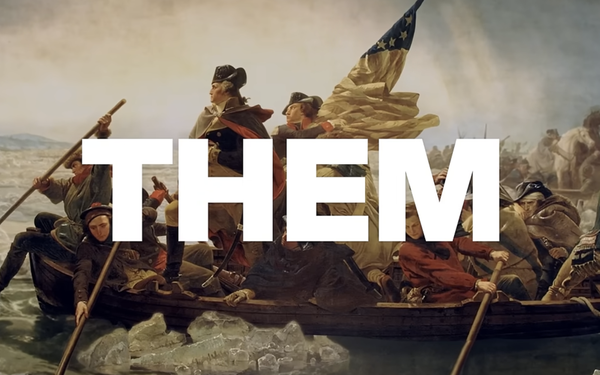
America is approaching its 250th
anniversary, and Ancestry is marking the milestone by telling 250 different family stories — a way to reflect the complexity of how the country was built, the company says.
After
previewing the effort with a 30-second teaser during last month’s Golden Globes, the campaign officially kicks off this week with a New
York City takeover centered on Wesley Williams, the first Black officer in the New York Fire Department, and his daring 1929 rescue of a Lower East Side family. “Stories of US” ads will
run across subway corridors, ferry terminals, and print placements before expanding to other cities and spotlighting additional historical figures.
The campaign is designed to show how
Ancestry’s proprietary records, personal archives, and AI-powered tools can bring family history to life. It also arrives amid heightened national tension around immigration and identity.
advertisement
advertisement
“This is definitely a polarizing time,” says Attica Jaques*, Ancestry’s CMO. “But for us, there’s a real opportunity for storytelling and family history.” The
double meaning of the campaign title, she says, is intentional. “These are 250 personal stories, but they’re also the story of the country. They weave together the individuals who helped
shape America.”
Ancestry’s research shows that roughly 70% of Americans are curious about their family history. “These stories may not unite us,” Jaques adds,
“but they can make us more empathetic.”
All 250 stories will ultimately live on a dedicated digital hub that also offers tools for users to explore and document their own family
histories.
The campaign comes at a moment of turbulence for the genealogy category. Last March, competitor 23andMe filed for bankruptcy, fueling consumer concern about data security tied to
DNA testing. Jaques says Ancestry’s model is fundamentally different. While the company does offer DNA testing, she says, its core focus is on historical records and context.
“We
help people understand who their ancestors actually were,” she says. In her own case, that meant not just learning that her heritage spans 18 regions — including an unexpected connection
to Peru — but uncovering her grandmother’s New York City voter registration card. “It was very likely the first election she was allowed to vote in.”
People 50 and
older remain Ancestry’s largest audience, Jaques said. “As people age, curiosity increases — especially around moments like births, weddings, or deaths, when families want to
preserve their stories.”
Military records are another strength. “Our World War II collections are among our largest,” she said, adding that Ancestry has begun digitizing
Korean War records and has helped reunite families with long-lost artifacts, including medals.
The ads were created by Ancestry’s in-house team and are running across TV, social media,
and print, supported by a performance media push.
*An earlier edition misspelled Attica Jaques' name.