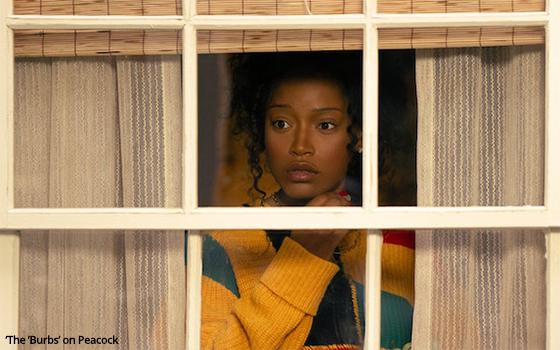
In two new upcoming shows, neighborly relationships
are anything but neighborly.
Instead, the neighbors seen in the scripted Peacock series “The ‘Burbs” and the HBO Max documentary series “Neighbors” are
decidedly at odds.
In “The ‘Burbs,” adapted from the 1989 Tom Hanks movie of the same name, newcomers to a quiet suburban neighborhood become
immediately suspicious of the deteriorating and seemingly abandoned old house across the street.
“The ’Burbs” stars Keke Palmer (above photo) as one half of
the couple who move out to the ’burbs from the city. The show is positioned as a dark comedy.
But
“Neighbors” is anything but comedic. In this show, the stories of disagreements between adjacent properties and their owners involve lawsuits, encounters with law enforcement and threats
of violence and death.
advertisement
advertisement
“Neighbors” is no cheap, unscripted show built around home videos recorded on iPhones and Ring smart doorbells.
Unlike those kinds of shows, “Neighbors” is a full-blown documentary series for which two director-producers -- Harrison Fishman and Dylan Redford --
traveled across the country for two years to immerse themselves in stories of clashing neighbors who they filmed and interviewed for the series.
Six episodes of
“Neighbors” start streaming on February 9 on HBO Max.
Some of the conflicts seen on the show include a
bitter battle between beachgoers and beachfront home owners who insist that the slice of beach in front of their homes is private property; and a story about a man who raises livestock in a community
where the ownership of such farm animals is against the law.
In another episode, two stories from Florida have neighbors in bitter disputes over the
ownership of small patches of grass. One of the feuds leads to accusations of stalking.
Think good fences make good neighbors? Well, not on
“Neighbors” and “The ’Burbs.” One of the most bitter of the disputes in “Neighbors” is between two adjacent property owners in remote Montana.
One of the neighbors insists that his horses have the right to freely roam and graze on his neighbor’s acreage.
His
neighbor thinks otherwise, and has installed a gate blocking the dirt road to his property, and built fences designed to block the animals. In this case, the fence and gate were not good for either
neighbor.
And by the way, the fence-building neighbor says his angry horse-owning neighbor threatened to kill him.
In “The ’Burbs,” it is a white picket fence that has the wife, newly moved to the suburbs, on
edge.
Seeing one on a nearby property, she observes that this traditional symbol of the American dream to own a home, strikes her as
“micro-aggressive.”
By this she may mean that she fears that white picket fences are built to keep someone out. On this subject, she is
right.
Fences, be they picket or otherwise, can be handy for keeping out unwanted children and dogs -- or the secretive
residents of a decaying house across the street.